

What materials are elastic grinding blocks made of?
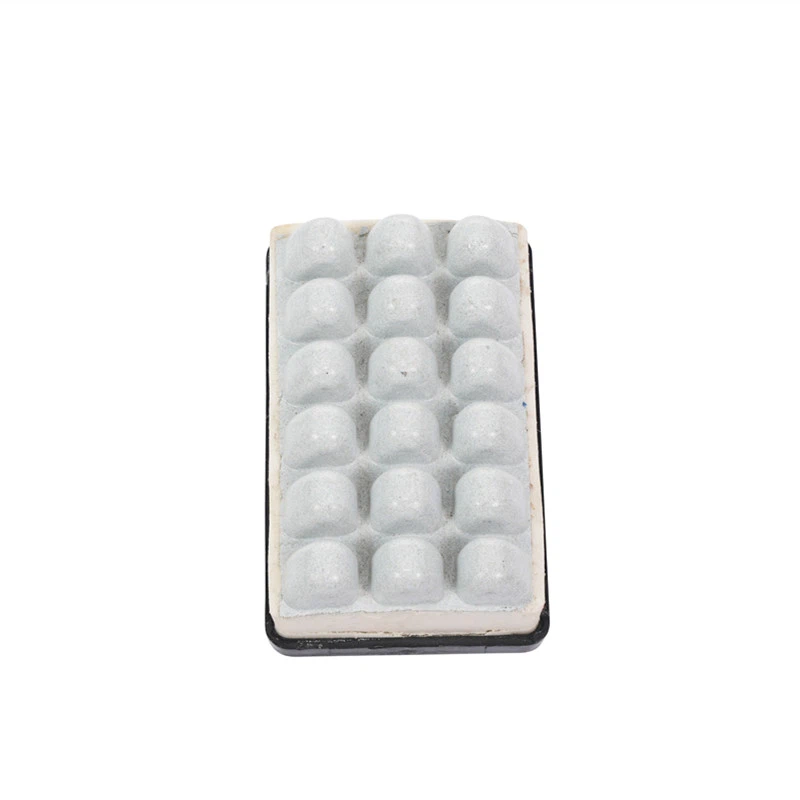
Elastic grinding blocks are versatile tools widely used in various industries for grinding, polishing, and finishing applications. As a supplier of elastic grinding blocks, I often receive inquiries about the materials used in their production. In this blog post, I will delve into the different materials that elastic grinding blocks are made of, their properties, and how they contribute to the performance of these essential tools.
Abrasive Grains
The primary component of an elastic grinding block is the abrasive grain. These grains are responsible for the cutting and grinding action of the block. Different types of abrasive grains offer varying levels of hardness, sharpness, and durability, making them suitable for different applications.
Silicon Carbide
Silicon carbide is a popular choice for elastic grinding blocks, especially for applications involving non - ferrous metals, ceramics, and glass. It is a very hard and sharp abrasive, with a Mohs hardness of around 9.5. Silicon carbide grains are excellent at cutting through hard and brittle materials, providing a fast material removal rate. They also have good thermal conductivity, which helps in dissipating heat generated during the grinding process, reducing the risk of overheating and damage to the workpiece. Abrasive Elastic Grinding Block for Ceramic Tiles often use silicon carbide as the abrasive grain due to its effectiveness in grinding ceramic surfaces.
Aluminum Oxide
Aluminum oxide is another commonly used abrasive grain in elastic grinding blocks. It is less hard than silicon carbide, with a Mohs hardness of about 9, but it is more tough and durable. Aluminum oxide is suitable for grinding ferrous metals, such as steel and cast iron. It has a self - sharpening property, which means that as the abrasive grains wear down, new sharp edges are exposed, maintaining the cutting performance of the grinding block over time. Elastic grinding blocks with aluminum oxide grains are often used in general - purpose metalworking applications.
Cubic Boron Nitride (CBN)
Cubic boron nitride is a super - abrasive material that is extremely hard, second only to diamond. It has excellent thermal stability and chemical inertness, making it ideal for grinding hard - to - machine materials, such as hardened steels, high - speed steels, and nickel - based alloys. CBN grains can withstand high temperatures without losing their cutting ability, resulting in a longer tool life and better surface finish. Resilient Abrasive Block with CBN abrasive grains are used in high - precision grinding applications where accuracy and surface quality are crucial.
Diamond
Diamond is the hardest known material, with a Mohs hardness of 10. Elastic grinding blocks with diamond abrasive grains are used for grinding extremely hard materials, such as natural and synthetic diamonds, tungsten carbide, and ceramics. Diamond abrasives offer a very high material removal rate and can produce a fine surface finish. However, they are relatively expensive compared to other abrasive materials. Elastic Polishing Abrasives often incorporate diamond grains for achieving a mirror - like finish on hard surfaces.
Bonding Materials
In addition to abrasive grains, elastic grinding blocks require a bonding material to hold the grains together and provide the necessary shape and structure. The bonding material also affects the flexibility, strength, and wear resistance of the grinding block.
Resin Bond
Resin bonds are widely used in elastic grinding blocks due to their excellent flexibility and shock resistance. Resin - bonded elastic grinding blocks can conform to the shape of the workpiece, making them suitable for grinding irregular surfaces. The resin bond also allows for a high cutting efficiency, as it can release the worn - out abrasive grains easily, exposing new grains for continuous cutting. Resin - bonded blocks are commonly used in applications where a smooth surface finish is required, such as in the automotive and aerospace industries.
Rubber Bond
Rubber - bonded elastic grinding blocks are known for their high elasticity and resilience. The rubber bond provides a soft and flexible grinding action, which is ideal for polishing and finishing applications. Rubber - bonded blocks can absorb shock and vibration during the grinding process, reducing the risk of damage to the workpiece. They are often used in the finishing of delicate surfaces, such as in the production of jewelry and electronic components.
Vitrified Bond
Vitrified bonds are made by fusing ceramic materials at high temperatures. Vitrified - bonded elastic grinding blocks offer high strength and rigidity, as well as good heat resistance. They have a long service life and can maintain their shape and cutting performance even under heavy grinding loads. Vitrified - bonded blocks are commonly used in high - precision grinding applications, such as in the manufacturing of cutting tools and machine parts.
Filler Materials
Filler materials are sometimes added to elastic grinding blocks to improve their performance and reduce costs. These materials can enhance the properties of the bonding material or the abrasive grains.
Calcium Carbonate
Calcium carbonate is a common filler material used in elastic grinding blocks. It can improve the dispersion of the abrasive grains in the bonding material, resulting in a more uniform distribution of the cutting edges. Calcium carbonate also helps to reduce the cost of the grinding block without significantly affecting its performance.
Silica
Silica is another filler material that can be used in elastic grinding blocks. It can increase the hardness and wear resistance of the bonding material, improving the overall durability of the grinding block. Silica can also enhance the heat resistance of the block, making it suitable for high - speed grinding applications.
Conclusion
In conclusion, elastic grinding blocks are made of a combination of abrasive grains, bonding materials, and filler materials. The choice of materials depends on the specific application requirements, such as the type of workpiece material, the desired surface finish, and the grinding conditions. As a supplier of elastic grinding blocks, I offer a wide range of products made from different materials to meet the diverse needs of my customers.
If you are interested in purchasing elastic grinding blocks for your specific application, I invite you to contact me for more information and to discuss your requirements. Our team of experts can provide you with professional advice and guidance to help you select the most suitable elastic grinding blocks for your needs.

References
- "Abrasive Technology Handbook" by R. L. King
- "Grinding and Finishing" by P. K. Rao
- "Advanced Materials for Grinding and Abrasive Machining" by Y. C. Shin