

How do elastic grinding blocks perform in humid environments?
Hey there! As a supplier of elastic grinding blocks, I've gotten a ton of questions about how these nifty tools hold up in humid environments. So, I thought I'd sit down and share what I've learned over the years.
First off, let's talk about what elastic grinding blocks are. They're these flexible, abrasive tools that are super useful for all sorts of grinding and polishing jobs. You can find them in different shapes and sizes, and they're used in a wide range of industries, from ceramics to metalworking. If you're curious about the different types available, check out Elastic Polishing Abrasives.
Now, when it comes to humid environments, there are a few things to consider. Humidity can have a pretty big impact on the performance of elastic grinding blocks, both good and bad.
The Good Side of Humidity
Believe it or not, a little bit of humidity can actually be beneficial for elastic grinding blocks. One of the main advantages is that it helps to keep the abrasive particles cool. When you're grinding, a lot of heat is generated, and this can cause the abrasive to wear out more quickly. But in a humid environment, the moisture in the air acts as a natural coolant, dissipating the heat and extending the life of the grinding block.
Another benefit is that humidity can help to reduce dust. Grinding can create a lot of fine dust particles, which can be a health hazard and also make the work environment messy. The moisture in the air helps to weigh down these dust particles, making them less likely to become airborne. This not only makes the work area cleaner but also improves the safety of the workers.
The Bad Side of Humidity
Of course, too much humidity can also cause problems. One of the biggest issues is that it can lead to rust and corrosion. Elastic grinding blocks often contain metal components, such as the backing or the bonding agent, and these can rust if they're exposed to moisture for too long. Rust can weaken the structure of the grinding block, making it less effective and more likely to break.
Humidity can also affect the adhesion of the abrasive particles. The bonding agent that holds the abrasive to the backing needs to be dry and stable in order to work properly. If the humidity is too high, the bonding agent can become soft and lose its grip, causing the abrasive particles to fall off. This can result in a significant decrease in the grinding performance and also increase the risk of injury to the operator.
How to Mitigate the Negative Effects
So, what can you do to make sure your elastic grinding blocks perform well in humid environments? Here are a few tips:
- Store them properly: When you're not using the grinding blocks, make sure to store them in a dry place. You can use a dehumidifier to control the humidity in the storage area, or simply keep them in a sealed container with a desiccant packet.
- Inspect them regularly: Before using the grinding blocks, take a few minutes to inspect them for any signs of rust or damage. If you notice any problems, replace the block immediately to avoid any safety issues.
- Use a protective coating: Some elastic grinding blocks come with a protective coating that helps to prevent rust and corrosion. If your grinding blocks don't have this coating, you can apply a thin layer of oil or wax to the surface to provide some protection.
- Adjust the grinding parameters: In a humid environment, you may need to adjust the grinding parameters, such as the speed and pressure, to compensate for the changes in the performance of the grinding block. Experiment with different settings to find the optimal combination for your specific application.
Real-World Examples
To give you a better idea of how elastic grinding blocks perform in humid environments, let's take a look at a couple of real-world examples.
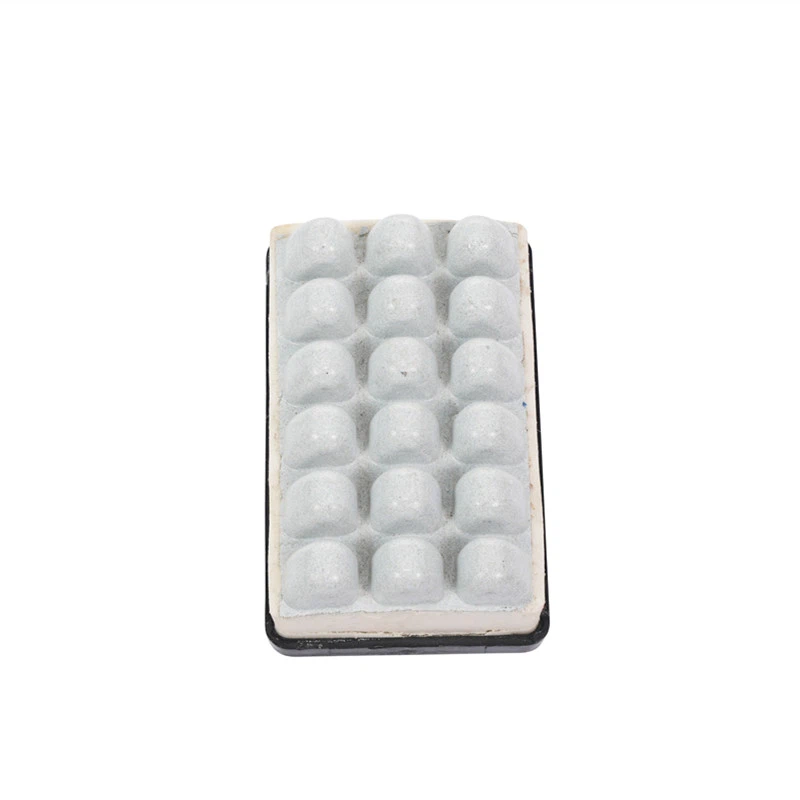

One of our customers is a ceramic tile manufacturer. They have a production facility in a coastal area, where the humidity is relatively high year-round. They were using elastic grinding blocks to polish the edges of the ceramic tiles, but they were experiencing some problems with rust and reduced performance. After we recommended some of the mitigation strategies mentioned above, such as storing the blocks in a dry place and using a protective coating, they noticed a significant improvement in the performance of the grinding blocks. The blocks lasted longer, and the quality of the polished tiles improved.
Another customer is a metalworking shop that operates in a tropical climate. They were using elastic grinding blocks to deburr and finish metal parts, but they were having trouble with the abrasive particles falling off due to the high humidity. By adjusting the grinding parameters and using a different type of bonding agent that was more resistant to moisture, they were able to overcome this problem and achieve better results.
Conclusion
In conclusion, elastic grinding blocks can perform well in humid environments, but it's important to take the necessary precautions to mitigate the negative effects of humidity. A little bit of humidity can be beneficial, but too much can cause rust, corrosion, and reduced performance. By storing the blocks properly, inspecting them regularly, using a protective coating, and adjusting the grinding parameters, you can ensure that your elastic grinding blocks last longer and perform at their best.
If you're interested in learning more about elastic grinding blocks or if you're looking for a reliable supplier, feel free to check out Abrasive Elastic Grinding Block for Ceramic Tiles and Elastic Grinding Block Ceramic Tile. We'd be happy to help you find the right product for your needs and answer any questions you may have. So, don't hesitate to get in touch and start a conversation about your procurement requirements!
References
- "The Effects of Humidity on Abrasive Tools" - Journal of Industrial Abrasives
- "Best Practices for Using Elastic Grinding Blocks in Challenging Environments" - International Journal of Grinding Technology