

What is the origin of radiused felt polishing wheels?
The origin of radiused felt polishing wheels is a topic that combines the rich history of materials science, manufacturing techniques, and the evolving demands of various industries. As a supplier of radiused felt polishing wheels, I have had the privilege of delving deep into the background of these essential tools, and I am excited to share this knowledge with you.
Early Beginnings of Felt in Polishing
Felt, a non - woven fabric made by matting, condensing, and pressing fibers together, has a long - standing history that dates back thousands of years. Its use in polishing can be traced to ancient civilizations. In ancient Egypt, for example, felt was used in basic forms of metalworking and jewelry making. The Egyptians were known for their intricate metal designs, and they needed a soft yet effective material to polish their creations. Felt, with its ability to conform to different shapes and its relatively fine texture, was an ideal candidate.
The properties of felt that made it suitable for polishing were its porosity and its ability to hold abrasive materials. The porous nature of felt allowed it to absorb polishing compounds, which could then be gradually released onto the surface being polished. This ensured a consistent and smooth polishing process. Over time, as metalworking techniques advanced in other parts of the world, such as in ancient Greece and Rome, the use of felt for polishing also spread.
Development of Radiused Shapes
The concept of radiused felt polishing wheels came about as industries started to demand more specialized polishing solutions. In the early days of manufacturing, most polishing wheels were flat. However, as products became more complex in shape, flat wheels were no longer sufficient. For instance, in the production of jewelry with curved surfaces or the polishing of cylindrical metal parts, a flat wheel would not be able to reach all areas effectively.
Engineers and craftsmen began to experiment with shaping felt wheels to have a radius. By giving the wheel a curved edge, it could better conform to the contours of the objects being polished. This innovation was a significant step forward in the field of polishing. It allowed for more precise and efficient polishing of curved and rounded surfaces, reducing the amount of manual labor required to achieve a high - quality finish.
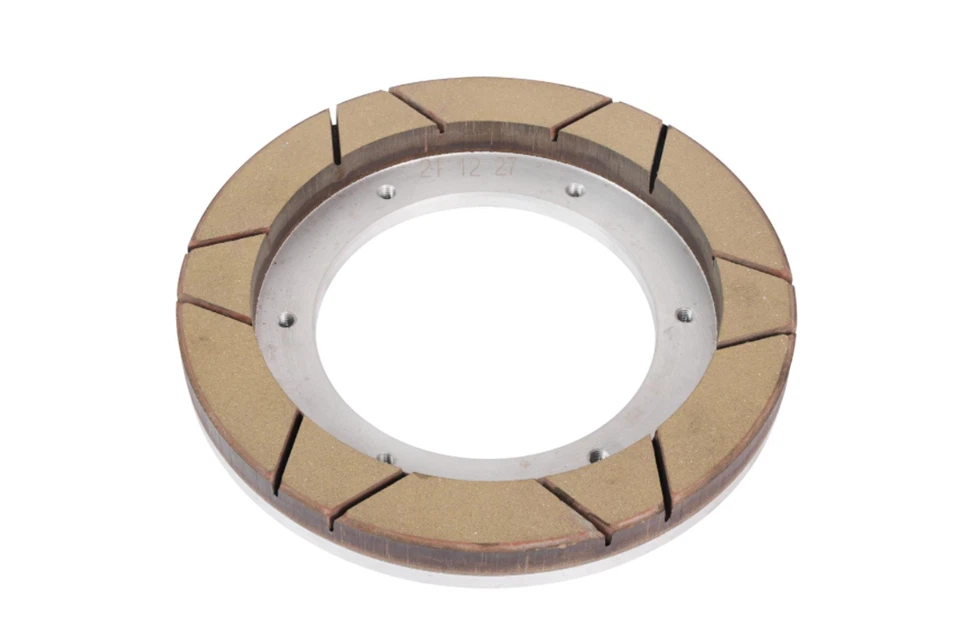

Technological Advancements in Felt Production
As the demand for radiused felt polishing wheels grew, so did the need for improvements in felt production. In the 19th century, the Industrial Revolution brought about significant changes in the manufacturing of felt. New machinery was developed that could produce felt more consistently and in larger quantities. This led to a more standardized product, which was crucial for the mass production of radiused felt polishing wheels.
The development of synthetic fibers also had a major impact on the quality of felt used in polishing wheels. Synthetic fibers, such as polyester and nylon, offered several advantages over natural fibers. They were more durable, had better chemical resistance, and could be engineered to have specific properties. For example, some synthetic fibers could be made to be more absorbent, which was beneficial for holding polishing compounds.
Modern Applications and the Role of Radiused Felt Polishing Wheels
Today, radiused felt polishing wheels are used in a wide range of industries. In the automotive industry, they are used to polish chrome parts, such as bumpers and trim. The radiused shape allows for a smooth and even finish on the curved surfaces of these parts. In the aerospace industry, these wheels are used to polish turbine blades and other precision components. The ability to conform to complex shapes is essential for achieving the high - quality finishes required in this industry.
In the jewelry industry, radiused felt polishing wheels are indispensable. They are used to polish rings, bracelets, and other pieces with intricate designs. The softness of the felt ensures that the delicate surfaces of the jewelry are not scratched, while the radiused shape allows for detailed work in hard - to - reach areas.
Related Products in the Polishing Industry
In addition to radiused felt polishing wheels, there are other important products in the polishing industry. The Wet Edge Polishing Wheel is designed for use in wet polishing applications. It is often used in the stone and glass industries, where a continuous supply of water is needed to cool the surface being polished and to carry away debris.
The Dry Squaring Wheel is used for dry grinding and squaring operations. It is commonly used in metal fabrication to create sharp edges and square corners on metal parts.
The Fiber Reinforced Grinding Disc is a powerful tool for heavy - duty grinding and cutting. It is made with a fiber - reinforced structure that provides strength and durability, making it suitable for use on tough materials such as steel and concrete.
The Future of Radiused Felt Polishing Wheels
Looking ahead, the future of radiused felt polishing wheels is bright. With the continuous advancement of technology, we can expect to see further improvements in the design and performance of these wheels. For example, new materials may be developed that offer even better polishing properties or are more environmentally friendly.
In addition, as industries such as 3D printing and nanotechnology continue to grow, there will be new challenges and opportunities for radiused felt polishing wheels. These emerging industries will require highly precise and specialized polishing solutions, and radiused felt polishing wheels are well - positioned to meet these demands.
Contact for Procurement
If you are in need of high - quality radiused felt polishing wheels for your industry, I invite you to reach out for procurement discussions. Our team of experts is ready to assist you in finding the right products that meet your specific requirements. Whether you are a small - scale jewelry maker or a large - scale automotive manufacturer, we have the solutions for you.
References
- "The History of Felt: From Ancient Times to the Modern Era" by Felt Historian Society
- "Advances in Polishing Technology" by International Journal of Manufacturing Science
- "Materials Science in the Polishing Industry" by American Institute of Materials Research