

What is the heat resistance of an abrasive filament brush?
Abrasive filament brushes are essential tools in various industrial applications, renowned for their ability to perform tasks such as surface finishing, deburring, and polishing. One crucial factor that often goes under - the radar but significantly impacts the performance and lifespan of these brushes is their heat resistance. As a leading supplier of abrasive filament brushes, I'm here to shed light on what heat resistance means for these brushes and why it matters.
Understanding Heat Resistance in Abrasive Filament Brushes
Heat resistance refers to the ability of an abrasive filament brush to withstand elevated temperatures without significant degradation of its physical and chemical properties. When an abrasive filament brush is in operation, friction is generated between the brush filaments and the workpiece. This friction leads to the production of heat. If the brush lacks adequate heat resistance, the filaments can start to melt, warp, or lose their abrasive particles, which ultimately reduces the brush's effectiveness and shortens its service life.
The heat resistance of an abrasive filament brush is determined by several factors, including the type of abrasive material used, the filament material, and the manufacturing process.
Abrasive Materials and Their Heat Resistance
There are different types of abrasive materials used in abrasive filament brushes, each with its own heat - resistant characteristics.
Aluminum Oxide
Aluminum oxide is one of the most commonly used abrasive materials. It has good heat resistance and can withstand relatively high temperatures without losing its cutting ability. Aluminum oxide abrasives are suitable for a wide range of applications, from light - duty finishing to heavy - duty grinding. When the brush is working, the aluminum oxide particles can maintain their sharp edges even under the heat generated by friction, ensuring consistent performance.
Silicon Carbide
Silicon carbide is another popular abrasive material. It has higher heat conductivity compared to aluminum oxide, which means it can dissipate heat more effectively. This property makes silicon carbide abrasives particularly suitable for applications where high - speed grinding generates a large amount of heat. However, silicon carbide is more brittle than aluminum oxide, so it may not be as durable in some heavy - impact applications.
Filament Materials and Heat Resistance
The filament material also plays a vital role in determining the heat resistance of an abrasive filament brush.
Nylon
Nylon is a widely used filament material in abrasive brushes. It has good flexibility and chemical resistance. Some types of nylon can withstand moderate temperatures, but if the temperature exceeds their tolerance level, the nylon filaments may start to soften and deform. However, advanced nylon formulations have been developed to improve heat resistance. These high - performance nylons can maintain their shape and integrity at higher temperatures, making them suitable for more demanding applications.
Polyester
Polyester filaments offer better heat resistance than standard nylon. They can withstand higher temperatures without significant softening or melting. Polyester - based abrasive filament brushes are often used in applications where heat generation is a concern, such as high - speed machining or polishing operations.
Impact of Heat on Abrasive Filament Brushes
Excessive heat can have several negative impacts on abrasive filament brushes.
Loss of Abrasive Particles
When the filaments are exposed to high temperatures, the bonding between the abrasive particles and the filaments can weaken. This leads to the loss of abrasive particles, reducing the brush's cutting and finishing capabilities. As a result, the brush may require more frequent replacement, increasing the overall cost of operation.
Filament Deformation
High heat can cause the filaments to deform. Deformed filaments cannot make proper contact with the workpiece, which leads to uneven surface finishing. In some cases, severely deformed filaments may even get entangled, rendering the brush ineffective.
Reduced Brush Lifespan
The combination of loss of abrasive particles and filament deformation significantly reduces the lifespan of the abrasive filament brush. This means that users have to replace the brushes more often, which not only increases the cost but also disrupts the production process.
Applications and Heat Resistance Requirements
Different applications have different heat resistance requirements for abrasive filament brushes.
Metalworking
In metalworking applications, such as deburring and surface finishing of metals, high - speed grinding and polishing operations generate a large amount of heat. For these applications, brushes with high - heat - resistant abrasive materials like silicon carbide and filament materials like polyester are preferred. For example, when deburring cast iron parts, the heat generated can be quite high, and a brush that can withstand these temperatures is essential for efficient and long - lasting performance.
Woodworking
Woodworking applications generally generate less heat compared to metalworking. However, when using abrasive filament brushes for sanding or shaping hard woods at high speeds, some heat is still produced. Nylon - based brushes with good heat resistance can be suitable for most woodworking tasks.

Our Product Range and Heat Resistance
As a supplier of abrasive filament brushes, we offer a wide range of products with varying heat - resistant properties to meet different application needs.
Our Abrasive Nylon Disc Brush is designed with high - quality nylon filaments and carefully selected abrasive materials. It is suitable for light - to - medium - duty applications where heat generation is relatively low. The nylon filaments provide flexibility and good surface finishing results, while the abrasive particles ensure effective cutting and cleaning.
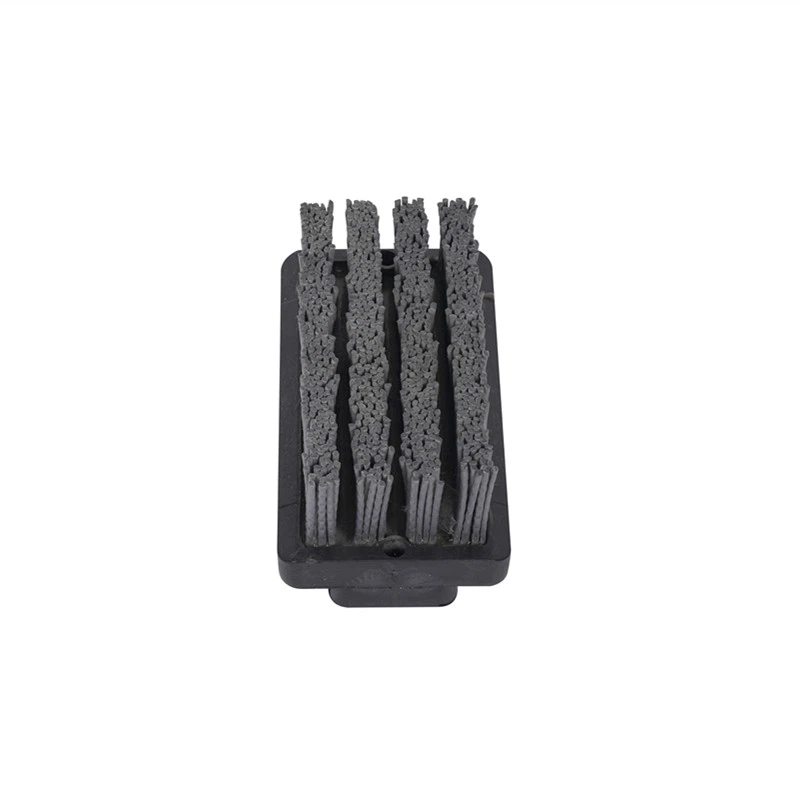
The Abrasive Filament Strip Brush is available in different filament materials, including polyester for applications where higher heat resistance is required. These strip brushes are commonly used in conveyor systems for cleaning and surface preparation, where heat can be generated due to continuous contact with the conveyor belt or the workpiece.
Our Abrasive Nylon Brush is another popular product. It combines the advantages of nylon filaments and abrasive particles, offering a cost - effective solution for various finishing and cleaning tasks. We have also developed advanced formulations to improve the heat resistance of these brushes, making them suitable for a wider range of applications.
Conclusion
Heat resistance is a critical factor in the performance and lifespan of abrasive filament brushes. Understanding the heat - resistant characteristics of different abrasive materials and filament materials is essential for selecting the right brush for a particular application. As a supplier, we are committed to providing high - quality abrasive filament brushes with excellent heat resistance to meet the diverse needs of our customers.
If you are looking for abrasive filament brushes for your industrial applications, we invite you to contact us for a detailed discussion. We can help you select the most suitable brush based on your specific requirements, ensuring optimal performance and cost - effectiveness.
References
- "Handbook of Abrasive Technology" by H. K. T. Behrens
- "Industrial Brush Manufacturing and Applications" by John Doe