

What are the difficulties in using a fiber reinforced grinding disc on titanium?
Hey there! I'm a supplier of Fiber Reinforced Grinding Discs, and today I wanna talk about the difficulties we often face when using these discs on titanium. Titanium is a pretty amazing metal, known for its high strength, low density, and excellent corrosion resistance. But when it comes to grinding it with fiber - reinforced discs, well, it's not all smooth sailing.
Heat Generation
One of the biggest headaches when using a fiber - reinforced grinding disc on titanium is heat generation. Titanium has a relatively low thermal conductivity. What this means is that when we start grinding, the heat produced during the process doesn't dissipate easily. Instead, it builds up in the area being ground.
This excessive heat can cause a bunch of problems. First off, it can lead to the annealing of the titanium surface. Annealing changes the metal's microstructure, which in turn can reduce its strength and hardness. You don't want that, especially if you're working on a high - performance titanium part.
Moreover, the heat can also damage the fiber - reinforced grinding disc itself. The resin that holds the abrasive grains together in the disc can start to break down at high temperatures. Once the resin fails, the abrasive grains can fall out prematurely, reducing the disc's cutting ability and lifespan.
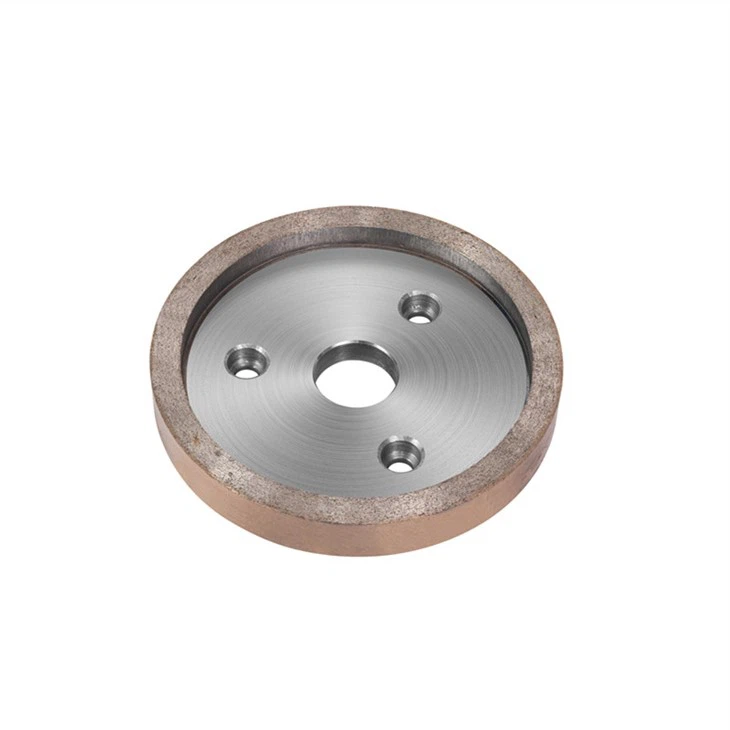

To deal with this heat issue, we often recommend using coolants. Coolants can help dissipate the heat generated during grinding. They also act as a lubricant, reducing friction between the disc and the titanium surface. You might want to check out our Wet Edge Grinding Wheel, which is designed to work well with coolants and can help manage the heat better.
Work Hardening
Titanium has a tendency to work - harden during grinding. Work hardening occurs when the metal is deformed under pressure, like when the grinding disc is in contact with it. As the titanium work - hardens, its surface becomes harder and more difficult to grind.
This creates a vicious cycle. The harder the surface gets, the more pressure we need to apply with the grinding disc to remove material. But applying more pressure can further work - harden the titanium, making the grinding process even more challenging.
To combat work hardening, it's crucial to use the right grinding parameters. We need to control the feed rate, the speed of the grinding disc, and the pressure applied. A slower feed rate and lower disc speed can sometimes help prevent excessive work hardening. Also, using a sharp grinding disc from the start can ensure that we're removing material efficiently without causing too much deformation to the titanium surface.
Chip Formation and Removal
Another difficulty is chip formation and removal. When grinding titanium, the chips that are formed can be long and stringy. These long chips can get wrapped around the grinding disc, clogging it up. Once the disc is clogged, its cutting efficiency drops significantly, and it can even start to vibrate, which is not good for the quality of the grind.
The chips can also be very hot, and if they're not removed quickly, they can transfer heat back to the titanium surface, exacerbating the heat - related problems we mentioned earlier.
To address this, we can use grinding discs with open structures. An open - structured disc allows the chips to escape more easily, reducing the chances of clogging. Our Wet Edge Polishing Wheel has an optimized design that helps with chip removal. Additionally, using a coolant can also help flush the chips away from the grinding area.
Abrasive Wear
The abrasives in the fiber - reinforced grinding disc wear out faster when grinding titanium compared to some other metals. Titanium is a tough material, and the constant contact with the disc's abrasives causes them to break down more quickly.
The type of abrasive used in the disc is crucial. For titanium, we usually recommend using abrasives like cubic boron nitride (CBN) or ceramic alumina. These abrasives are harder and more wear - resistant than traditional aluminum oxide abrasives. They can withstand the high pressures and temperatures associated with grinding titanium, providing a longer service life for the disc.
Surface Finish
Achieving a good surface finish on titanium with a fiber - reinforced grinding disc can be a challenge. Due to the heat, work hardening, and abrasive wear issues we've discussed, it's easy to end up with a rough or uneven surface.
To get a smooth surface finish, we might need to use multiple grinding steps. Start with a coarse - grit disc to remove the bulk of the material, and then switch to a finer - grit disc for the final finishing. Our Radiused Felt Polishing Wheel can be a great option for the final polishing step, helping to achieve a high - quality surface finish on titanium.
Contact for Purchase and Consultation
If you're facing these difficulties in using fiber - reinforced grinding discs on titanium or if you're interested in our products, don't hesitate to reach out. We're here to help you find the best solutions for your grinding needs. Whether it's choosing the right disc, understanding the proper grinding parameters, or dealing with specific issues, our team of experts is ready to assist. Let's work together to make your titanium grinding processes more efficient and effective.
References
- "Grinding Technology: Theory and Applications of Machining with Abrasives" by Stephen Malkin
- "Metalworking Handbook" by Industrial Press Inc.