

Can fiber grinding abrasive blocks be used for grinding niobium alloys?
Hey there! As a supplier of Fiber Grinding Abrasive Blocks, I often get asked a bunch of questions about what these nifty tools can and can't do. One question that's been popping up more frequently lately is, "Can fiber grinding abrasive blocks be used for grinding niobium alloys?" Well, let's dive right into it and find out.
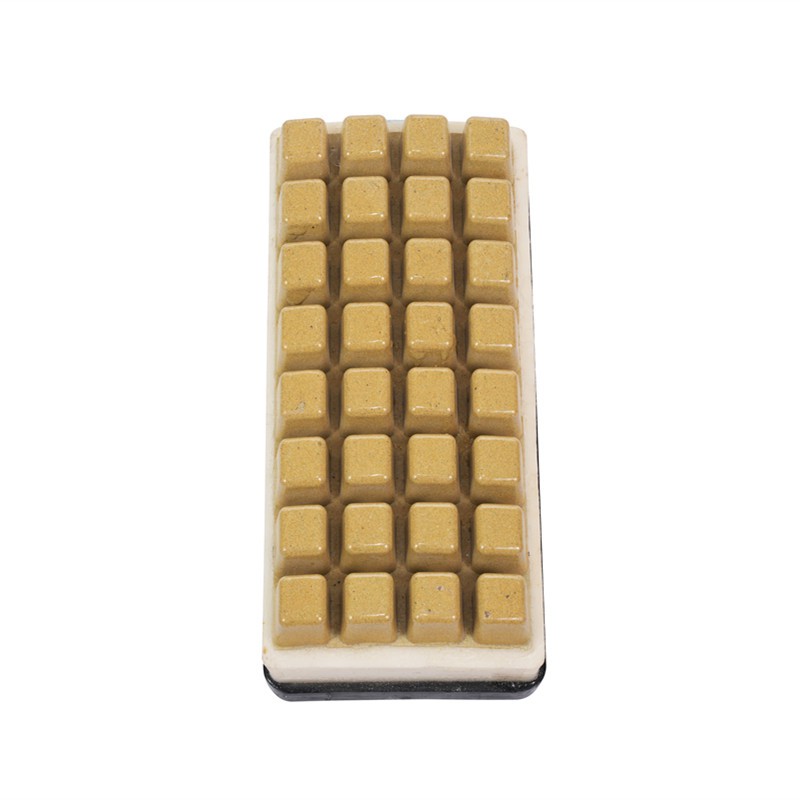
First off, let's talk a bit about fiber grinding abrasive blocks. These blocks are pretty amazing. They're made up of fibers that are impregnated with abrasive particles. This unique construction gives them a flexibility and conformability that's hard to beat. They can be used for a wide range of applications, from deburring to finishing, on all sorts of materials like metals, plastics, and composites. You can check out our Fiber Grinding Abrasive Block for more details on the product.
Now, onto niobium alloys. Niobium is a rare, soft, and ductile metal. When it's alloyed with other elements, it forms materials that are super strong, have high melting points, and are resistant to corrosion. These alloys are used in a variety of high - tech industries, such as aerospace, electronics, and energy. Because of their unique properties, grinding niobium alloys can be a bit of a challenge.
So, can fiber grinding abrasive blocks handle the job? The answer is, it depends. There are a few factors we need to consider.
Abrasive Type
The type of abrasive used in the fiber grinding block is crucial. For niobium alloys, we need an abrasive that's hard enough to cut through the material but also won't cause excessive heat generation. Some common abrasives used in fiber grinding blocks are aluminum oxide, silicon carbide, and zirconia alumina.
Aluminum oxide is a popular choice. It's relatively hard and can provide a good balance between cutting ability and heat resistance. Silicon carbide is even harder and is great for grinding hard and brittle materials. However, it can sometimes be a bit too aggressive for niobium alloys, causing surface damage. Zirconia alumina is another option. It's tough and self - sharpening, which means it can maintain its cutting edge for longer periods.
Block Density
The density of the fiber grinding block also plays a role. A denser block will have more abrasive particles per unit area, which can result in a faster material removal rate. But if it's too dense, it might generate too much heat, which can lead to problems like thermal damage to the niobium alloy. On the other hand, a less dense block will be more flexible and generate less heat, but it might take longer to grind the material.

Grinding Pressure and Speed
The pressure and speed at which you grind the niobium alloy are important. Applying too much pressure can cause the abrasive block to wear out quickly and can also damage the surface of the alloy. Similarly, grinding at too high a speed can generate excessive heat. It's all about finding the right balance. You might need to do some testing to figure out the optimal pressure and speed for your specific application.
Surface Finish Requirements
What kind of surface finish do you need on the niobium alloy? If you're looking for a smooth, polished finish, you might need to use a finer - grit fiber grinding block. Our Non - woven Nylon Fickert Fiber Grinding Block comes in different grits, which can be used to achieve various surface finishes. For a more aggressive material removal, a coarser - grit block would be more appropriate.
Advantages of Using Fiber Grinding Abrasive Blocks for Niobium Alloys
If the right conditions are met, fiber grinding abrasive blocks can offer several advantages when grinding niobium alloys.
- Flexibility: As mentioned earlier, these blocks are flexible. They can conform to the shape of the workpiece, making them ideal for grinding complex geometries. This is especially useful in aerospace applications where niobium alloy parts often have intricate shapes.
- Cool Grinding: Fiber grinding blocks can generate less heat compared to some other grinding methods. This is important because niobium alloys can be sensitive to heat, and excessive heat can cause changes in their microstructure and properties.
- Longer Tool Life: With proper use, fiber grinding abrasive blocks can have a relatively long tool life. This means you won't have to replace them as often, which can save you time and money in the long run.
Limitations
Of course, there are also some limitations.
- Material Removal Rate: Compared to some high - speed grinding methods, the material removal rate of fiber grinding abrasive blocks might be slower. If you need to remove a large amount of material quickly, you might need to consider other options.
- Cost: High - quality fiber grinding abrasive blocks can be a bit pricey. However, when you factor in their long tool life and the quality of the finish they can provide, the cost might be justified.
In conclusion, fiber grinding abrasive blocks can be used for grinding niobium alloys, but it's important to choose the right block based on the abrasive type, density, and your specific requirements. If you're in the business of working with niobium alloys and are looking for a reliable grinding solution, our fiber grinding abrasive blocks could be a great option.
If you're interested in learning more about our products or have any questions about using fiber grinding abrasive blocks for niobium alloys, don't hesitate to reach out. We're here to help you find the best grinding solution for your needs. And if you're also looking for a polishing option, check out our Nylon Fiber Polishing Wheel.
Let's start a conversation and see how we can work together to meet your grinding requirements. Whether you're a small - scale workshop or a large - scale industrial operation, we've got the products and expertise to support you.
References
- "Handbook of Abrasive Technology" - This comprehensive guide provides in - depth information about different types of abrasives and their applications.
- "Niobium and Its Alloys: Properties and Applications" - A great resource for understanding the unique properties of niobium alloys and the challenges associated with machining them.