

Are there any chemical reactions that a Resilient Abrasive Block may undergo during use?
Hey there! As a supplier of Resilient Abrasive Blocks, I often get asked about the chemical reactions that these blocks might go through during use. So, I thought I'd sit down and write this blog to share some insights on this topic.
First off, let's understand what a Resilient Abrasive Block is. These blocks are super useful in various industries, especially for grinding and polishing tasks. They're known for their flexibility and durability, which makes them a top choice for many professionals. You can check out some of our products like the Elastic Grinding Block Ceramic Tile, Elastic Polishing Abrasives, and Abrasive Elastic Grinding Block for Ceramic Tiles.
Now, let's dive into the chemical reactions. The main components of a Resilient Abrasive Block usually include abrasives like silicon carbide or aluminum oxide, and a bonding agent. The bonding agent holds the abrasives together and gives the block its shape and flexibility.
When the Resilient Abrasive Block is in use, the most obvious interaction is the mechanical one - the abrasives rub against the surface being worked on, wearing it down. But there can also be some chemical reactions happening behind the scenes.
One common chemical reaction is oxidation. If the surface being ground is made of a metal, the abrasion process can expose fresh metal to the air. Metals like iron and steel can react with oxygen in the air to form metal oxides. For example, iron reacts with oxygen to form iron oxide, which we commonly know as rust. The abrasion can speed up this process because it removes the existing oxide layer, allowing more oxygen to reach the fresh metal surface.
The abrasives themselves can also undergo some changes. Silicon carbide, for instance, is quite stable under normal conditions. But when it's subjected to high temperatures during the grinding process, it can react with oxygen in the air. At very high temperatures, silicon carbide can oxidize to form silicon dioxide and carbon monoxide. This reaction can be a bit of a concern because it can reduce the effectiveness of the abrasive over time.
Another aspect to consider is the reaction with any lubricants or coolants that are used during the grinding process. Many times, lubricants are applied to reduce friction and heat generation. These lubricants can contain various chemicals, and they might react with the abrasives or the bonding agent in the block. For example, some lubricants contain water, and if the bonding agent is sensitive to water, it could start to break down. This can lead to the abrasives coming loose from the block, which is not a good thing.
The bonding agent in the Resilient Abrasive Block can also be affected by chemical reactions. Some bonding agents are made of polymers, which are large molecules made up of repeating units. These polymers can be sensitive to heat, moisture, and certain chemicals. If the block is exposed to high temperatures for a long time, the polymer chains in the bonding agent can start to break down. This can cause the block to lose its shape and its ability to hold the abrasives together.
Moisture can also be a problem for the bonding agent. If the block is stored in a humid environment or if water gets on it during the grinding process, the bonding agent might absorb the moisture. This can lead to swelling and softening of the bonding agent, which again affects the performance of the block.
Now, let's talk about how we can minimize these chemical reactions. One way is to use the right type of Resilient Abrasive Block for the job. Different blocks are designed for different materials and applications. For example, if you're grinding a metal surface, you might want to choose a block with an abrasion-resistant bonding agent that can withstand the high temperatures and potential oxidation.
Using the right lubricants and coolants is also crucial. Make sure to choose products that are compatible with the abrasives and the bonding agent in the block. Some lubricants are specifically formulated to prevent oxidation and chemical reactions.
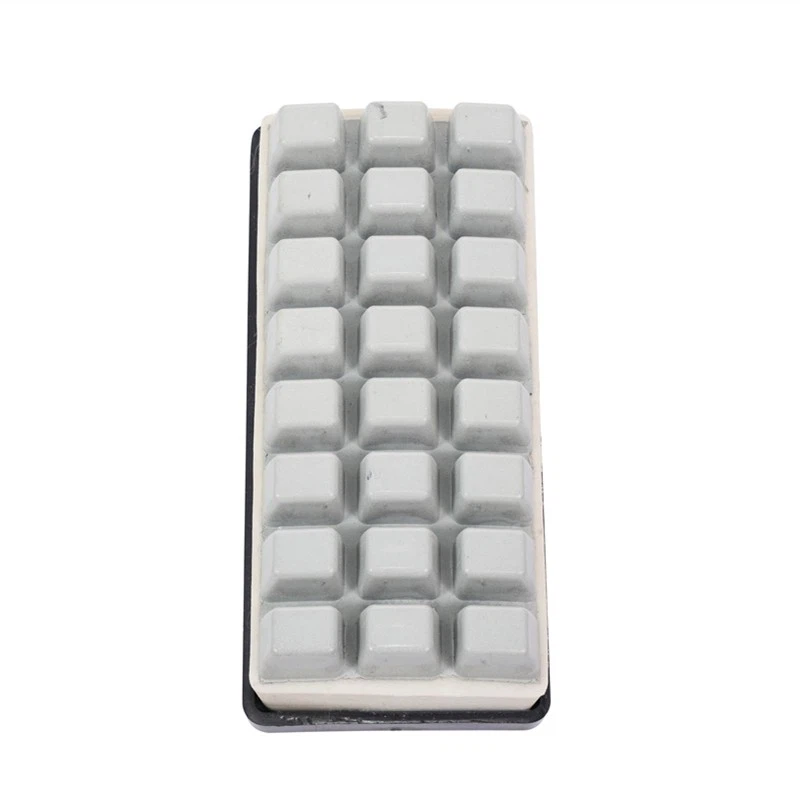

Proper storage of the Resilient Abrasive Blocks is also important. Keep them in a dry, cool place away from direct sunlight and any chemicals that could react with them. This can help extend the shelf life of the blocks and ensure that they perform at their best when you use them.
In conclusion, while there are definitely some chemical reactions that a Resilient Abrasive Block may undergo during use, we can take steps to manage and minimize these reactions. By understanding the chemistry behind these blocks and how they interact with the environment and the materials they're working on, we can make more informed decisions about which blocks to use and how to use them effectively.
If you're interested in learning more about our Resilient Abrasive Blocks or if you're thinking about making a purchase, don't hesitate to reach out. We're always happy to chat and help you find the right products for your needs. Whether you're a professional in the manufacturing industry or a DIY enthusiast, our blocks can make your grinding and polishing tasks a whole lot easier. So, get in touch and let's start a conversation about how we can meet your requirements.
References
- Materials Science textbooks on abrasives and bonding agents
- Industry research papers on the performance of resilient abrasive blocks during use