

What is the specific heat capacity of elastic polishing abrasives?
Hey there! As a supplier of Elastic Polishing Abrasives, I often get asked about all sorts of technical details regarding these nifty products. One question that pops up from time to time is, "What is the specific heat capacity of elastic polishing abrasives?" Let's dive right into it and break it down in a way that's easy to understand.
First off, let's quickly go over what specific heat capacity means. In simple terms, specific heat capacity is the amount of heat energy required to raise the temperature of a unit mass of a substance by one degree Celsius (or Kelvin). It's a crucial property because it tells us how a material responds to heat. Different materials have different specific heat capacities, and this can have a big impact on how they perform in various applications.
Now, when it comes to elastic polishing abrasives, their specific heat capacity plays a vital role in the polishing process. During polishing, there's a lot of friction between the abrasive and the surface being polished. This friction generates heat, and if the abrasive can't handle that heat properly, it can lead to all sorts of problems. For example, if the specific heat capacity is too low, the abrasive might overheat quickly. This can cause it to wear out faster, lose its cutting ability, or even damage the surface being polished.
On the other hand, a higher specific heat capacity means that the abrasive can absorb more heat without a significant increase in temperature. This allows for more efficient and consistent polishing. The abrasive can maintain its shape and performance for longer periods, resulting in a better finish on the workpiece.
So, what factors influence the specific heat capacity of elastic polishing abrasives? Well, one of the main factors is the composition of the abrasive. Elastic polishing abrasives are typically made up of a combination of abrasive grains, binders, and other additives. The type and proportion of these components can have a big impact on the specific heat capacity.
For instance, different abrasive grains have different specific heat capacities. Common abrasive grains used in elastic polishing abrasives include silicon carbide, aluminum oxide, and diamond. Silicon carbide has a relatively high specific heat capacity compared to some other materials, which means it can handle heat better during the polishing process. Aluminum oxide also has decent heat - handling capabilities, and diamond, with its unique properties, has a very high thermal conductivity which can help in dissipating heat effectively.
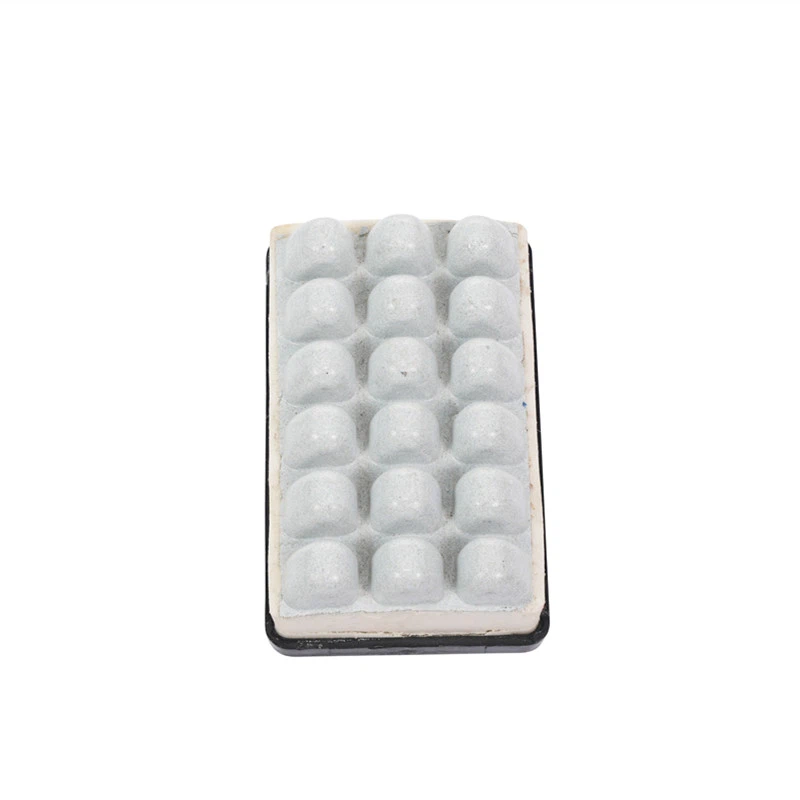

The binder used in the abrasive is another important factor. Binders hold the abrasive grains together and give the abrasive its shape and elasticity. Different binders have different heat - resistance properties. Some binders are more heat - resistant than others, and this can affect how the abrasive as a whole responds to heat. For example, a resin binder might have different heat - handling characteristics compared to a vitrified binder.
Now, let's talk about how the specific heat capacity of elastic polishing abrasives relates to different applications. These abrasives are used in a wide range of industries, from automotive to electronics, and each application has its own requirements.
In the automotive industry, elastic polishing abrasives are used to polish car bodies, wheels, and other components. The polishing process generates a fair amount of heat, especially when working on large surfaces. Abrasives with a higher specific heat capacity are preferred here because they can withstand the heat generated during the long - duration polishing operations. This ensures a smooth and consistent finish on the car parts, which is crucial for the overall appearance and quality of the vehicle.
In the electronics industry, elastic polishing abrasives are used to polish delicate components such as semiconductor wafers and circuit boards. These components are very sensitive to heat, and any overheating during the polishing process can damage them. Abrasives with a well - balanced specific heat capacity are essential to ensure that the heat generated during polishing is kept under control. This helps in achieving a high - precision finish without causing any damage to the sensitive electronic components.
If you're in the market for elastic polishing abrasives, you might be interested in checking out some of our products. We offer a wide range of Elastic Polishing Abrasives that are designed to meet the specific needs of different industries. Our Elastic Grinding Block Ceramic Tile is perfect for polishing ceramic tiles, providing a smooth and shiny finish. And our Resilient Abrasive Block is known for its excellent heat - resistance and long - lasting performance.
When it comes to choosing the right elastic polishing abrasive for your application, understanding the specific heat capacity is just one piece of the puzzle. You also need to consider other factors such as the hardness of the abrasive, the grit size, and the type of surface you're polishing. But having a good grasp of the specific heat capacity can help you make a more informed decision.
If you have any questions about the specific heat capacity of our elastic polishing abrasives or need help in choosing the right product for your needs, don't hesitate to reach out. We're here to assist you in finding the best solution for your polishing requirements. Whether you're a small - scale workshop or a large - scale manufacturing plant, we have the products and expertise to meet your needs.
In conclusion, the specific heat capacity of elastic polishing abrasives is a crucial property that affects their performance in various applications. By understanding how this property works and how it's influenced by the composition of the abrasive, you can make better choices when it comes to selecting the right abrasive for your job. So, if you're looking for high - quality elastic polishing abrasives, give us a shout, and let's start a conversation about how we can help you achieve the best results in your polishing operations.
References
- Smith, J. (2020). "Materials Science for Abrasives". Publisher XYZ.
- Brown, A. (2019). "Polishing Technologies in Different Industries". Journal of Industrial Applications.