

What is the hardness of elastic grinding blocks?
The hardness of elastic grinding blocks is a crucial factor that significantly influences their performance and application in various industries. As a leading supplier of elastic grinding blocks, I am well - versed in the intricacies of this characteristic and its implications for our customers.
Understanding the Concept of Hardness in Elastic Grinding Blocks
Hardness in elastic grinding blocks refers to the ability of the abrasive material within the block to resist deformation, wear, and indentation. It is not just about the physical firmness of the block but also about how effectively it can maintain its cutting edge and shape during the grinding process. The hardness is determined by several factors, including the type of abrasive grains used, the bonding agent, and the manufacturing process.
Abrasive Grains
Abrasive grains are the heart of any grinding block. Different types of abrasive grains have different hardness levels. For example, silicon carbide is known for its high hardness and is often used in elastic grinding blocks for applications that require aggressive cutting, such as grinding hard metals and ceramics. Aluminum oxide, on the other hand, is a more common abrasive grain with a relatively lower hardness but is suitable for a wide range of materials, including wood, plastics, and softer metals.
The size and distribution of the abrasive grains also play a role in the overall hardness of the elastic grinding block. Finer grains generally result in a smoother finish but may have a lower cutting rate, while coarser grains can cut more aggressively but may leave a rougher surface.
Bonding Agent
The bonding agent holds the abrasive grains together and gives the elastic grinding block its shape and structure. The type of bonding agent used can greatly affect the hardness of the block. Resin - bonded elastic grinding blocks are known for their flexibility and relatively lower hardness, which makes them suitable for applications where a gentle touch is required, such as polishing and finishing. Vitrified bonding, on the other hand, creates a harder and more rigid block, which is ideal for heavy - duty grinding and shaping operations.
Manufacturing Process
The manufacturing process of elastic grinding blocks can also impact their hardness. Factors such as the pressure applied during molding, the curing temperature, and the duration of the curing process all contribute to the final hardness of the block. A well - controlled manufacturing process ensures consistent hardness across all the blocks produced, which is essential for reliable performance in industrial applications.
Importance of Hardness in Different Applications
The hardness of elastic grinding blocks is directly related to their performance in different applications. Here are some common scenarios where the right hardness is crucial:
Metalworking
In metalworking, the hardness of the elastic grinding block needs to be carefully selected based on the type of metal being processed. For hard metals like stainless steel and titanium, a harder grinding block with a high - hardness abrasive grain, such as silicon carbide, is required to achieve efficient cutting and shaping. Softer metals like aluminum and copper, on the other hand, can be processed with a softer grinding block to avoid over - heating and surface damage.
Woodworking
In woodworking, the hardness of the elastic grinding block affects the finish and quality of the wood surface. A softer block is often used for sanding and smoothing the wood, while a harder block may be used for more aggressive shaping and removal of rough edges. The flexibility of the elastic grinding block also allows it to conform to the contours of the wood, providing a uniform finish.

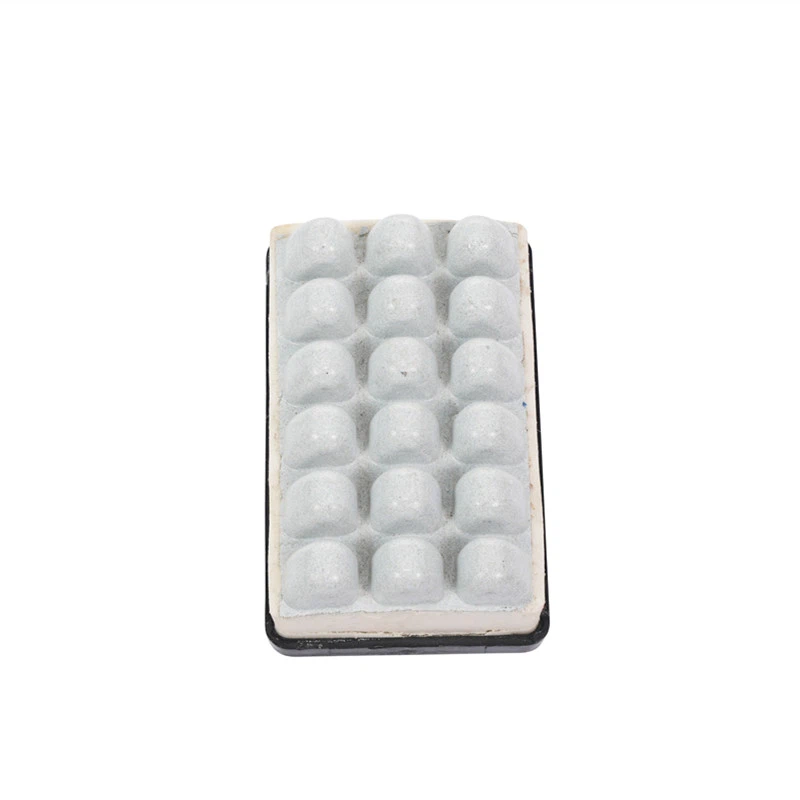
Ceramics and Tile Grinding
When it comes to grinding ceramics and tiles, a hard elastic grinding block is necessary to cut through the tough material. Elastic Grinding Block Ceramic Tile with high - hardness abrasive grains can quickly and accurately shape and finish ceramic and tile surfaces, ensuring a precise fit and a smooth appearance.
Measuring the Hardness of Elastic Grinding Blocks
There are several methods for measuring the hardness of elastic grinding blocks. One of the most common methods is the Rockwell hardness test, which measures the depth of penetration of an indenter into the material under a specific load. Another method is the Brinell hardness test, which uses a spherical indenter to create an indentation in the material, and the hardness is calculated based on the diameter of the indentation.
However, these traditional hardness tests may not be entirely suitable for elastic grinding blocks due to their unique elastic properties. Specialized tests have been developed to measure the hardness of elastic materials, taking into account their ability to deform and recover. These tests provide a more accurate assessment of the hardness of elastic grinding blocks and help in selecting the right block for a particular application.
Impact of Hardness on the Lifespan of Elastic Grinding Blocks
The hardness of an elastic grinding block has a direct impact on its lifespan. A harder block generally has a longer lifespan as it can withstand more wear and tear during the grinding process. However, if the hardness is too high, the block may become brittle and prone to cracking, which can reduce its effectiveness and lifespan.
On the other hand, a softer block may wear out more quickly but can provide a more flexible and forgiving grinding action. The key is to find the right balance between hardness and flexibility to ensure optimal performance and a reasonable lifespan for the elastic grinding block.
Our Offerings as an Elastic Grinding Block Supplier
As a supplier of elastic grinding blocks, we offer a wide range of products with different hardness levels to meet the diverse needs of our customers. Our Elastic Polishing Abrasives are designed with a softer hardness for fine - finishing and polishing applications, providing a smooth and glossy surface. Our Resilient Abrasive Block series, on the other hand, features a harder hardness for heavy - duty grinding and shaping operations.
We use high - quality abrasive grains and advanced bonding agents in our manufacturing process to ensure consistent hardness and performance across all our products. Our team of experts is always available to provide technical support and advice on selecting the right elastic grinding block for your specific application.
Contact Us for Your Elastic Grinding Block Needs
If you are in the market for high - quality elastic grinding blocks, we invite you to contact us for a detailed discussion. Whether you need a block for metalworking, woodworking, ceramics, or any other application, we have the expertise and products to meet your requirements. Our goal is to provide you with the best - performing elastic grinding blocks at competitive prices. Let's start a conversation about how we can help you achieve your grinding and finishing goals.
References
- ASTM International. (Year). Standard test methods for hardness of materials.
- Norton Abrasives. (Year). Technical guide to abrasive products.
- Machinery's Handbook. (Year). A comprehensive reference for mechanical engineering and manufacturing.