

What is the effect of grinding wheel grain size on casting grinding?
When it comes to casting grinding, one of the most critical factors that significantly influences the process and its outcomes is the grain size of the grinding wheel. As a dedicated supplier of Grinding Wheels For Casting, I have witnessed firsthand the diverse effects that different grain sizes can have on the casting grinding operation. In this blog, I will delve into the details of how grinding wheel grain size impacts casting grinding, exploring both the positive and negative aspects to provide a comprehensive understanding for those involved in the casting industry.
Understanding Grinding Wheel Grain Size
Before we dive into the effects, it's essential to understand what grinding wheel grain size means. The grain size of a grinding wheel refers to the average size of the abrasive particles on the wheel's surface. It is typically measured in terms of a grit number. A lower grit number indicates larger abrasive grains, while a higher grit number represents smaller grains. For example, a 24 - grit wheel has much larger grains compared to a 600 - grit wheel.
Material Removal Rate
One of the most obvious effects of grinding wheel grain size on casting grinding is the material removal rate. Larger - grained grinding wheels, such as those with a grit size of 24 to 60, are excellent for high - volume material removal. The large abrasive particles have more cutting edges and can penetrate deeper into the casting material. This allows them to remove large amounts of material quickly. In casting operations where there is a significant amount of excess material to be removed, like rough shaping or removing large casting fins, these coarse - grained wheels are the go - to choice.
On the other hand, smaller - grained wheels, with grit sizes above 120, have a much lower material removal rate. The small abrasive particles are less capable of taking deep cuts. However, they are ideal for finishing operations where precision and a smooth surface finish are required. For instance, when a casting needs to be polished to a high - gloss finish, a fine - grained wheel can be used to gradually refine the surface without removing too much material.
Surface Finish
The surface finish of the cast part is another crucial aspect affected by the grinding wheel grain size. Coarse - grained wheels leave a rough surface finish on the casting. The large abrasive particles create deep scratches and grooves on the surface as they cut through the material. While this may be acceptable for parts that will undergo further processing or where the surface finish is not a critical factor, it is not suitable for applications where a smooth surface is required.

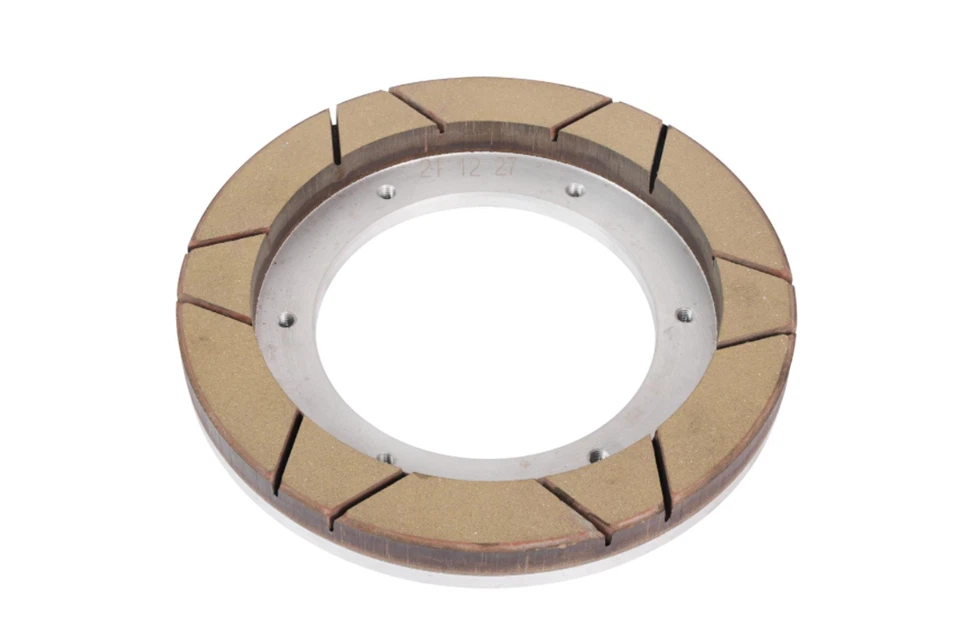
Fine - grained wheels, in contrast, produce a much smoother surface finish. The small abrasive particles make finer cuts and leave shallower scratches. This results in a surface that is closer to the desired final finish. For castings that are used in applications where aesthetics or a low - friction surface is important, such as in automotive or aerospace components, fine - grained grinding wheels are essential. For additional finishing options, Polishing Pads can be used in conjunction with fine - grained wheels to achieve an even higher - quality surface finish.
Wheel Wear
Wheel wear is also closely related to the grain size of the grinding wheel. Coarse - grained wheels tend to wear more quickly during the grinding process. The large abrasive particles are more likely to break off or become dull as they cut through the hard casting material. This means that coarse - grained wheels may need to be replaced more frequently, which can increase the overall cost of the grinding operation.
Fine - grained wheels, however, generally have a longer lifespan. The small abrasive particles are less prone to breakage and can maintain their cutting ability for a more extended period. This reduces the frequency of wheel replacement and can lead to cost savings in the long run. Nevertheless, fine - grained wheels may be more sensitive to loading, which occurs when the pores of the wheel become clogged with the removed material. This can reduce the wheel's cutting efficiency and may require more frequent dressing to keep it in optimal condition.
Heat Generation
Heat generation during the grinding process is a significant concern, as excessive heat can cause damage to the casting material, such as thermal cracking or changes in the material's microstructure. Coarse - grained wheels generate more heat during grinding. The large abrasive particles take deeper cuts, which require more energy and generate more friction. This increased friction leads to higher heat production.
Fine - grained wheels, on the other hand, generate less heat. The smaller cuts made by the fine abrasive particles result in less friction and, therefore, less heat. This makes fine - grained wheels more suitable for grinding heat - sensitive casting materials or for applications where minimizing heat - related damage is crucial.
Precision and Dimensional Accuracy
Precision and dimensional accuracy are vital in casting grinding, especially for parts that need to meet strict tolerances. Coarse - grained wheels are less precise in terms of dimensional control. The large abrasive particles can cause more significant variations in the material removal, making it challenging to achieve tight tolerances.
Fine - grained wheels offer better precision and dimensional accuracy. The small abrasive particles allow for more controlled material removal, enabling operators to achieve the desired dimensions more accurately. For castings that require high - precision machining, such as in the manufacturing of engine components or precision tools, fine - grained grinding wheels are the preferred choice. Additionally, Dry Squaring Wheel can be used in combination with fine - grained wheels to ensure accurate squaring and dimensional control.
Choosing the Right Grain Size
Selecting the appropriate grinding wheel grain size for casting grinding depends on several factors. The type of casting material, the required surface finish, the amount of material to be removed, and the desired precision all play a role in the decision - making process.
For rough grinding operations where a large amount of material needs to be removed quickly, coarse - grained wheels (24 - 60 grit) are recommended. These wheels can efficiently handle the initial shaping and removal of excess material.
For semi - finishing operations, medium - grained wheels (80 - 120 grit) can be used to refine the surface and prepare it for the final finishing process.
For finishing operations where a smooth surface finish and high precision are required, fine - grained wheels (above 120 grit) are the best choice. These wheels can produce the desired surface quality and dimensional accuracy.
Conclusion
In conclusion, the grain size of the grinding wheel has a profound effect on casting grinding. It influences the material removal rate, surface finish, wheel wear, heat generation, and precision of the grinding process. As a supplier of Grinding Wheels For Casting, I understand the importance of choosing the right grain size for each specific application. By carefully considering the requirements of the casting grinding operation, manufacturers can select the most suitable grinding wheel to achieve optimal results.
If you are involved in the casting industry and are looking for high - quality grinding wheels or need advice on choosing the right grain size for your specific application, I encourage you to reach out. Our team of experts is ready to assist you in making the best decision for your casting grinding needs. Contact us to start a procurement discussion and take your casting grinding operations to the next level.
References
- Boothroyd, G., & Knight, W. A. (2006). Fundamentals of machining and machine tools. CRC Press.
- Trent, E. M., & Wright, P. K. (2000). Metal cutting. Butterworth - Heinemann.
- Kalpakjian, S., & Schmid, S. R. (2013). Manufacturing engineering and technology. Pearson.