

How does the grain size of elastic grinding blocks affect the grinding result?
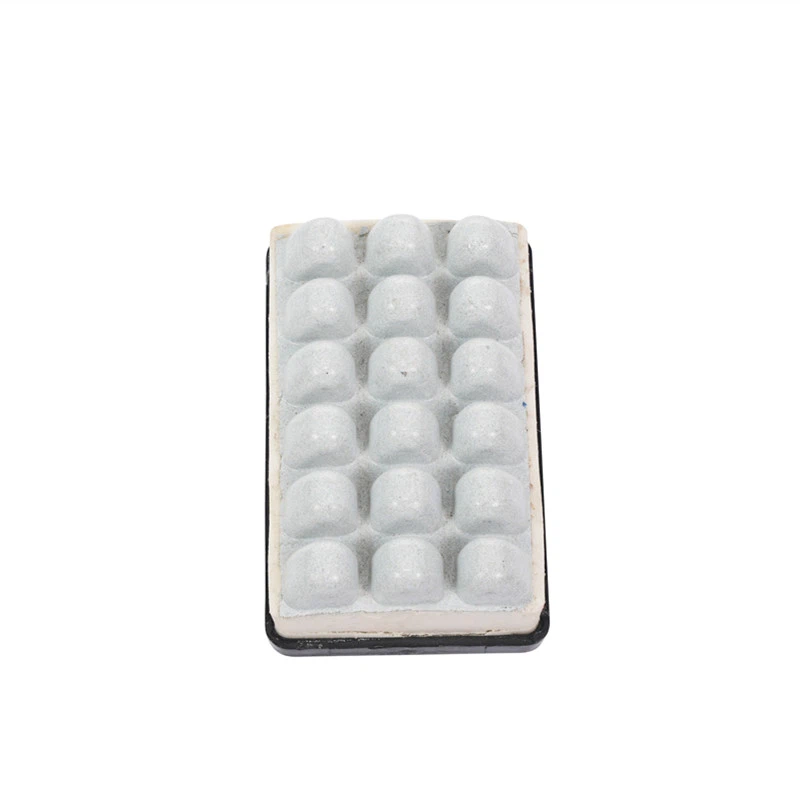
The grain size of elastic grinding blocks plays a crucial role in determining the quality and efficiency of the grinding process. As a leading supplier of elastic grinding blocks, we have witnessed firsthand how different grain sizes can significantly impact the grinding results across various applications. In this blog, we will delve into the science behind grain size and its effects on grinding, providing valuable insights for both professionals and enthusiasts in the industry.
Understanding Grain Size in Elastic Grinding Blocks
Grain size refers to the average diameter of the abrasive particles embedded in the elastic grinding block. It is typically measured in mesh or grit size, with smaller numbers indicating larger particles and vice versa. For example, a 40 - grit grinding block has larger abrasive grains compared to a 220 - grit block. The choice of grain size depends on several factors, including the material being ground, the desired surface finish, and the amount of material removal required.
Material Removal Rate
One of the most significant effects of grain size on grinding results is the material removal rate. Larger grain sizes, such as 40 - 60 grit, are more aggressive and can remove material quickly. This makes them ideal for rough grinding operations, where a large amount of material needs to be removed in a short time. For instance, when preparing a rough - cut ceramic tile for further processing, a coarse - grained elastic grinding block can efficiently shape the tile and remove any excess material. You can find suitable Elastic Grinding Block Ceramic Tile with different grain sizes for such applications on our website.
On the other hand, smaller grain sizes, like 220 - 400 grit, remove material at a slower pace. They are used for fine - tuning and finishing operations, where precision and a smooth surface finish are paramount. When polishing a ceramic tile to a high - gloss finish, a fine - grained elastic grinding block is essential to achieve the desired result. Our Abrasive Elastic Grinding Block for Ceramic Tiles offers a range of fine - grain options for these delicate tasks.
Surface Finish
The surface finish of the workpiece is directly influenced by the grain size of the elastic grinding block. Coarse - grained blocks leave a rough surface with visible scratches and grooves. This may be acceptable for some applications where the surface will be further processed or where a rustic look is desired. However, for applications that require a smooth and polished surface, such as in the production of high - end ceramic products, fine - grained grinding blocks are necessary.
Fine - grained elastic grinding blocks create a smoother surface finish by removing smaller amounts of material at a time. They can eliminate the scratches left by coarser blocks and produce a mirror - like finish. For example, in the manufacturing of decorative ceramic pieces, using a series of progressively finer - grained elastic grinding blocks can transform a rough - surfaced workpiece into a beautifully polished item. Our Elastic Polishing Abrasives are designed to provide excellent surface finishes for a variety of materials.

Heat Generation
Grain size also affects the amount of heat generated during the grinding process. Coarse - grained blocks generate more heat due to their aggressive material removal action. The large abrasive particles rub against the workpiece with greater force, causing friction and heat buildup. Excessive heat can damage the workpiece, especially if it is a heat - sensitive material like certain types of ceramics or plastics.
Fine - grained blocks, on the other hand, generate less heat because they remove material more gently. This makes them suitable for grinding heat - sensitive materials, as they minimize the risk of thermal damage. When choosing an elastic grinding block for a heat - sensitive application, it is important to select a fine - grain option to ensure the integrity of the workpiece.
Wear and Tear of the Grinding Block
The wear and tear of the elastic grinding block are related to the grain size as well. Coarse - grained blocks tend to wear out faster than fine - grained ones. The large abrasive particles are more likely to break off or become dull during the aggressive grinding process. This means that coarse - grained blocks may need to be replaced more frequently, which can increase the overall cost of the grinding operation.
Fine - grained blocks, with their smaller and more numerous abrasive particles, distribute the grinding force more evenly. This results in less wear on individual particles and a longer lifespan for the grinding block. However, fine - grained blocks may also become clogged more easily with the removed material, especially when grinding soft or sticky materials. Regular cleaning and proper use of coolant can help prevent clogging and extend the life of fine - grained elastic grinding blocks.
Choosing the Right Grain Size
Selecting the appropriate grain size for your grinding application requires careful consideration of several factors. First, understand the material you are grinding. Hard materials may require coarser grains for initial material removal, while softer materials may be better suited for finer grains to avoid excessive damage.
Next, determine the desired surface finish. If a smooth, polished finish is required, start with a coarser grain for rough grinding and then progress to finer grains for finishing. The amount of material to be removed also plays a role. For large - scale material removal, choose a coarse - grained block, and for minor adjustments and finishing, opt for a fine - grained one.
Applications in Different Industries
In the ceramic industry, elastic grinding blocks with different grain sizes are used throughout the production process. Coarse - grained blocks are used for shaping and trimming ceramic tiles, while fine - grained blocks are used for polishing and achieving a high - quality surface finish. Our elastic grinding blocks are widely used in this industry, providing reliable performance and excellent results.
In the automotive industry, elastic grinding blocks are used for deburring, surface preparation, and finishing of metal parts. Coarse - grained blocks can quickly remove burrs and excess material, while fine - grained blocks are used for achieving a smooth and uniform surface on engine components, body panels, and other parts.
In the woodworking industry, elastic grinding blocks are used for sanding and finishing wooden surfaces. Coarse - grained blocks can be used to remove rough spots and level the surface, while fine - grained blocks are used for creating a smooth and polished finish on furniture, cabinets, and other wooden products.
Conclusion
In conclusion, the grain size of elastic grinding blocks has a profound impact on the grinding result. It affects the material removal rate, surface finish, heat generation, and wear and tear of the grinding block. As a supplier of high - quality elastic grinding blocks, we offer a wide range of grain sizes to meet the diverse needs of different industries and applications. Whether you need to perform rough grinding or fine - finishing operations, we have the right elastic grinding block for you.
If you are interested in learning more about our elastic grinding blocks or would like to discuss your specific grinding requirements, please feel free to contact us. We are committed to providing you with the best products and solutions to help you achieve optimal grinding results.
References
- Smith, J. (2018). Abrasive Technology Handbook. New York: Industrial Press.
- Johnson, A. (2019). Surface Finishing in Manufacturing. London: Elsevier.
- Brown, K. (2020). Grinding Processes and Applications. Chicago: McGraw - Hill.