

How does the abrasion resistance of elastic grinding blocks affect their lifespan?
As a supplier of elastic grinding blocks, I've seen firsthand how abrasion resistance plays a huge role in determining their lifespan. In the world of industrial grinding and finishing, these elastic grinding blocks are pretty awesome. They can be used for all sorts of materials, from ceramics to metals, and they've got this unique flexibility that makes them stand out.
Let's start by understanding what abrasion resistance actually means. Abrasion resistance is all about how well a material can withstand the wear and tear from friction when it's in contact with another surface. For elastic grinding blocks, this is super important because they're constantly rubbing against the workpiece during the grinding process. The more abrasion-resistant they are, the longer they can keep doing their job effectively.
When an elastic grinding block has high abrasion resistance, it can maintain its shape and cutting ability for a much longer time. Think about it like this: if you're using a block with low abrasion resistance, it'll start to wear down quickly. The abrasive grains on the surface will fall off, and the block will lose its effectiveness. You'll have to replace it more often, which means more downtime and higher costs for your operations.
On the other hand, a highly abrasion-resistant elastic grinding block can handle a lot of grinding before it needs to be replaced. This is a huge advantage for businesses because it reduces the frequency of block changes. You can keep your production line running smoothly without having to constantly stop and swap out the grinding blocks. It also means that you'll get more value for your money since you're getting more use out of each block.
Another factor to consider is the quality of the finish. A block with good abrasion resistance can provide a more consistent finish over its lifespan. As the block wears evenly, it continues to remove material at a steady rate, resulting in a smooth and uniform surface on the workpiece. This is crucial, especially in industries where precision and quality are top priorities, like the automotive or aerospace sectors.
Now, let's talk about the different types of elastic grinding blocks and how their abrasion resistance affects their lifespan. One popular type is the Abrasive Elastic Grinding Block for Ceramic Tiles. These blocks are specifically designed for grinding ceramic tiles, which are known for their hardness. The high abrasion resistance of these blocks allows them to cut through the tough ceramic material without wearing out too quickly. This means that you can grind a large number of tiles before having to replace the block, saving you both time and money.
The Resilient Abrasive Block is another great option. It's got a unique structure that combines flexibility with high abrasion resistance. This makes it suitable for a wide range of applications, from deburring to surface finishing. The block can adapt to the shape of the workpiece, ensuring a consistent and efficient grinding process. And because of its good abrasion resistance, it can last for a long time, even when used on challenging materials.
Then there are the Elastic Polishing Abrasives. These are used for the final polishing stage to give the workpiece a smooth and shiny finish. The abrasion resistance of these abrasives is important because it determines how long they can maintain their polishing ability. A high-quality elastic polishing abrasive will be able to polish multiple workpieces without losing its effectiveness, resulting in a better overall finish.
But how do we measure the abrasion resistance of elastic grinding blocks? There are several methods, but one common way is to use a wear test. In this test, the block is rubbed against a standard surface for a certain number of cycles, and the amount of material lost is measured. The less material that's lost, the higher the abrasion resistance of the block.
Manufacturers also use different techniques to improve the abrasion resistance of elastic grinding blocks. For example, they might use high-quality abrasive grains that are more resistant to wear. They can also apply special coatings to the block to protect the abrasive grains and extend their lifespan. These coatings can help reduce friction and prevent the grains from falling off too quickly.
In addition to the material and manufacturing techniques, the way you use the elastic grinding block also affects its abrasion resistance and lifespan. For example, using the right pressure and speed during the grinding process is crucial. If you apply too much pressure, the block will wear out faster. On the other hand, if the speed is too low, the block might not be able to cut through the material effectively, which can also lead to premature wear.
Proper storage is also important. Elastic grinding blocks should be stored in a dry and cool place to prevent them from deteriorating. Exposure to moisture and extreme temperatures can damage the block and reduce its abrasion resistance.

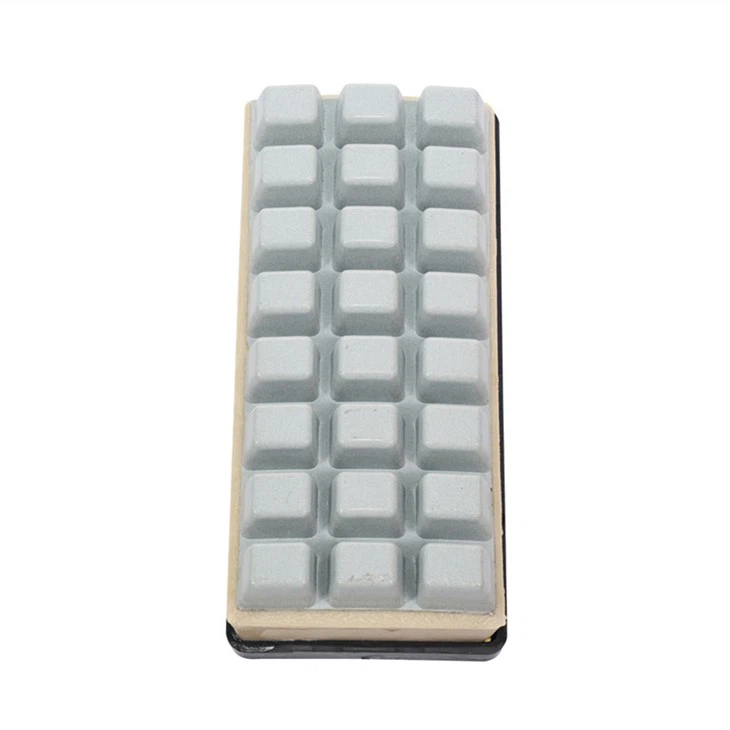
So, in conclusion, the abrasion resistance of elastic grinding blocks has a significant impact on their lifespan. High abrasion resistance means longer-lasting blocks, lower costs, and better quality finishes. Whether you're in the ceramic, metal, or any other industry that requires grinding and finishing, choosing elastic grinding blocks with good abrasion resistance is a smart move.
If you're interested in learning more about our elastic grinding blocks or are looking to purchase them for your business, I'd love to have a chat with you. We've got a wide range of products to suit different applications, and we can help you find the perfect block for your needs. Just reach out, and we can start the conversation.
References
- Smith, J. (2020). Abrasion Resistance in Industrial Grinding Tools. Journal of Manufacturing Technology.
- Johnson, A. (2019). The Impact of Abrasion Resistance on Grinding Block Lifespan. International Journal of Abrasive Technology.