

Can a Wet Edge Polishing Wheel be used on sapphire?
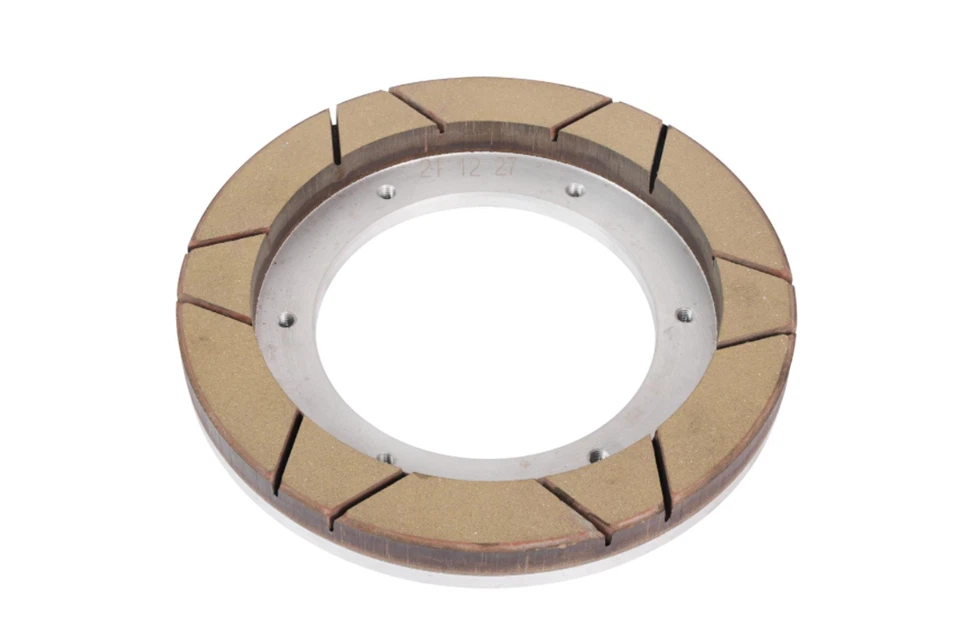
In the realm of precision manufacturing and materials processing, the choice of the right tool can significantly impact the outcome of a project. As a supplier of Wet Edge Polishing Wheel, I've been frequently asked whether our wet edge polishing wheels can be effectively used on sapphire. This blog post aims to delve into this question, exploring the properties of sapphire, the capabilities of wet edge polishing wheels, and the practical considerations when using them together.
Understanding Sapphire
Sapphire is a remarkable material, renowned for its exceptional hardness, second only to diamond on the Mohs scale. It has a hardness of 9, which means it can withstand significant wear and tear and is highly resistant to scratching. This hardness is attributed to its crystal structure, composed of aluminum oxide (Al₂O₃) with a tightly packed lattice arrangement.
Beyond its hardness, sapphire also exhibits excellent optical properties. It is transparent in the visible and infrared spectra, making it a popular choice for applications such as watch crystals, optical windows, and components in high - end electronics. Additionally, sapphire has good thermal conductivity and chemical stability, which further expand its range of applications in harsh environments.
The Function and Features of Wet Edge Polishing Wheels
Wet edge polishing wheels are designed to provide a high - quality finish on the edges of various materials. They operate in a wet environment, which offers several advantages. Firstly, the water helps to cool the work surface during the polishing process. This is crucial because excessive heat can cause damage to the material, such as cracking or warping, especially in the case of delicate materials.
Secondly, the water acts as a lubricant, reducing friction between the wheel and the material. This not only improves the polishing efficiency but also extends the life of the wheel. The abrasive particles on the surface of the wet edge polishing wheel can effectively remove material from the edge of the workpiece, gradually smoothing and polishing it to a desired finish.
Our wet edge polishing wheels are available in a variety of grit sizes, allowing for different levels of material removal and surface finish. Coarser grits are used for initial shaping and rough polishing, while finer grits are employed for the final, high - gloss finish.
Feasibility of Using Wet Edge Polishing Wheels on Sapphire
The high hardness of sapphire presents both challenges and opportunities when it comes to using wet edge polishing wheels. On one hand, the hardness means that the abrasive particles on the wheel need to be sufficiently hard to effectively remove material from the sapphire surface. Our wet edge polishing wheels are made with high - quality abrasives, such as diamond or cubic boron nitride (CBN), which have the hardness required to work on sapphire.
When it comes to the polishing process, the wet environment provided by the wet edge polishing wheel is beneficial for sapphire. Since sapphire is sensitive to heat due to its brittleness, the water cooling effect helps prevent thermal stress and cracking. The lubricating effect of the water also reduces the risk of chipping and micro - cracking on the sapphire edge during polishing.
However, it's important to note that polishing sapphire is a time - consuming process. Due to its hardness, the material removal rate is relatively slow compared to softer materials. This requires patience and careful control of the polishing parameters, such as the rotational speed of the wheel, the pressure applied, and the flow rate of the coolant.
Practical Considerations
Grit Selection
As mentioned earlier, the choice of grit size is crucial when polishing sapphire. For the initial shaping and rough polishing of sapphire edges, a coarser grit wheel, such as 120 - 220 grit, can be used to remove the bulk of the material. As the polishing progresses, finer grit wheels, such as 400 - 800 grit, are used to achieve a smoother surface finish. For the final high - gloss finish, wheels with grit sizes of 1000 or higher can be selected.
Polishing Parameters
The rotational speed of the wet edge polishing wheel should be carefully adjusted. A too - high speed can generate excessive heat and increase the risk of damage to the sapphire. Generally, a moderate speed in the range of 1000 - 2000 RPM is recommended for sapphire polishing. The pressure applied during polishing should also be controlled. Excessive pressure can lead to chipping or cracking, while too little pressure may result in an inefficient polishing process.
Compatibility with Other Tools
In some cases, wet edge polishing wheels may be used in conjunction with other tools for sapphire processing. For example, Dry Squaring Wheel can be used for the initial squaring and shaping of sapphire pieces before the wet edge polishing process. After the wet edge polishing, Polishing Pads can be used to achieve an even higher - quality finish.
Case Studies and Success Stories
We have received feedback from many customers who have successfully used our wet edge polishing wheels on sapphire. One of our customers, a manufacturer of high - end watch crystals, was able to achieve a smooth and scratch - free edge finish on their sapphire watch crystals using our wet edge polishing wheels. By carefully selecting the grit sizes and adjusting the polishing parameters, they were able to improve the overall quality of their products and increase customer satisfaction.
Another customer, in the optical component industry, used our wet edge polishing wheels to polish the edges of sapphire optical windows. The water - cooled and lubricated polishing process helped to prevent thermal damage and chipping, resulting in high - precision optical components with excellent optical performance.
Conclusion and Call to Action
In conclusion, wet edge polishing wheels can be effectively used on sapphire, provided that the right abrasive materials, grit sizes, and polishing parameters are selected. The wet environment of the polishing wheel offers significant advantages in terms of heat dissipation and lubrication, which are crucial for processing the hard and brittle sapphire.

If you are involved in sapphire processing and are looking for a reliable wet edge polishing wheel solution, we are here to help. Our team of experts can provide you with professional advice on product selection and polishing process optimization. We invite you to contact us for a detailed discussion on your specific needs and to explore the possibilities of using our wet edge polishing wheels in your sapphire processing projects.
References
- "Materials Science and Engineering: An Introduction" by William D. Callister Jr. and David G. Rethwisch.
- Technical literature on sapphire processing from industry associations.
- Internal research and development reports from our company on wet edge polishing wheel applications.