

Can a Wet Edge Polishing Wheel be used for polishing mirrors?
Hey there! As a supplier of Wet Edge Polishing Wheels, I often get asked all sorts of questions about our products. One question that pops up quite a bit is, "Can a Wet Edge Polishing Wheel be used for polishing mirrors?" Well, let's dig into this topic and find out.
First off, let's understand what a Wet Edge Polishing Wheel is. These wheels are designed to work in wet conditions, which helps in reducing heat generated during the polishing process. The wet environment also helps to carry away the debris created while polishing, keeping the surface clean and reducing the risk of scratches. They come in different sizes, grits, and materials, each suited for specific applications.
Now, when it comes to mirrors, they are made of glass with a reflective coating on one side. The glass surface needs to be smooth and free of any scratches or blemishes to ensure a clear reflection. Polishing a mirror is a delicate process because any damage to the glass or the reflective coating can ruin the mirror's functionality.
So, can a Wet Edge Polishing Wheel do the job? The answer is, it depends. There are a few factors we need to consider.
Grit Selection
The grit of the polishing wheel plays a crucial role. Grit refers to the size of the abrasive particles on the wheel. A lower grit number means larger abrasive particles, which are more aggressive and are used for removing deeper scratches or rough surfaces. A higher grit number indicates smaller particles, which are used for fine polishing and achieving a smooth finish.
For mirrors, we generally want to use a high - grit Wet Edge Polishing Wheel. This is because mirrors usually don't have deep scratches, and we just need to give them a final shine. Using a low - grit wheel can actually cause more harm than good, as it may scratch the glass surface. For example, a wheel with a grit of 1000 or higher would be a better choice for mirror polishing.
Wheel Material
The material of the Wet Edge Polishing Wheel also matters. Some common materials include diamond, ceramic, and silicon carbide. Diamond wheels are known for their hardness and durability. They can be very effective in polishing glass, including mirrors. Ceramic wheels are also a good option as they offer a consistent cut and can produce a high - quality finish. Silicon carbide wheels are often used for general - purpose polishing but may not be as effective for mirror polishing as diamond or ceramic wheels.
Polishing Technique
Even with the right wheel, the polishing technique is essential. When using a Wet Edge Polishing Wheel on a mirror, we need to apply light pressure. Excessive pressure can cause uneven polishing or even break the mirror. It's also important to move the wheel in a consistent pattern, such as circular or linear motions, to ensure an even finish.

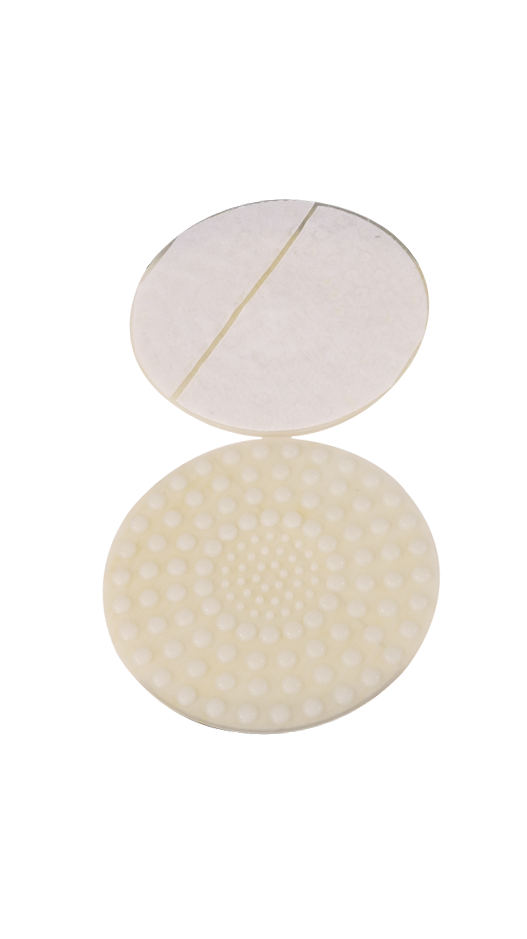
Advantages of Using a Wet Edge Polishing Wheel for Mirrors
There are several advantages to using a Wet Edge Polishing Wheel for mirror polishing. As mentioned earlier, the wet environment helps to reduce heat. Mirrors are sensitive to heat, and excessive heat can cause the glass to expand and contract, leading to cracks or damage to the reflective coating.
The wet setup also helps in preventing the buildup of debris on the wheel. This means that the wheel can maintain its cutting ability for a longer time, and we can achieve a more consistent finish. Additionally, the wet environment can act as a lubricant, making the polishing process smoother and reducing the risk of scratches.
Limitations
However, there are also some limitations. If the mirror has very deep scratches, a Wet Edge Polishing Wheel may not be able to completely remove them. In such cases, we may need to use other methods first, such as using a Polishing Pads with a lower grit to remove the deep scratches and then follow up with a high - grit Wet Edge Polishing Wheel for the final polish.
Another limitation is that if the mirror has a very thin or delicate reflective coating, there is a risk of damaging it during the polishing process. We need to be extra careful and test the wheel on a small, inconspicuous area of the mirror first.
Comparing with Other Polishing Tools
Let's compare the Wet Edge Polishing Wheel with other common polishing tools for mirrors.
Polishing Wheel Wool
Polishing Wheel Wool is another option for mirror polishing. Wool wheels are soft and can be used with polishing compounds. They are good for achieving a high - gloss finish. However, they may not be as effective in removing minor scratches as a Wet Edge Polishing Wheel. Also, wool wheels can get clogged with debris more easily, which may affect the polishing quality.
Fiber Reinforced Grinding Disc
Fiber Reinforced Grinding Disc is typically used for more heavy - duty grinding tasks. They are not the best choice for mirror polishing. These discs are designed to remove a significant amount of material quickly, and using them on a mirror can cause deep scratches and damage the reflective coating.
Tips for Using a Wet Edge Polishing Wheel on Mirrors
- Test First: Always test the wheel on a small, hidden area of the mirror to make sure it doesn't cause any damage.
- Keep it Wet: Make sure the wheel is constantly wet during the polishing process. This can be achieved by using a water supply system or dipping the wheel in water frequently.
- Clean the Wheel: Regularly clean the wheel to remove any debris that may have accumulated on it. This will help maintain its performance.
In conclusion, a Wet Edge Polishing Wheel can be used for polishing mirrors, but it's important to choose the right wheel (in terms of grit and material) and use the correct polishing technique. With the right approach, we can achieve a beautiful, shiny finish on mirrors.
If you're interested in purchasing Wet Edge Polishing Wheels for mirror polishing or any other applications, feel free to reach out. We have a wide range of products to meet your needs, and our team is always ready to provide you with the best advice and support. Let's get in touch and start your next polishing project!
References
- "Glass Polishing Handbook" - A comprehensive guide on glass polishing techniques and tools.
- "Advances in Abrasive Technology" - Research on different abrasive materials and their applications in polishing.