

Can a Resilient Abrasive Block be used for rough grinding?
Hey there! As a supplier of Resilient Abrasive Blocks, I often get asked if these blocks can be used for rough grinding. Well, let's dive right into it and find out.
First off, what exactly is a Resilient Abrasive Block? It's a type of abrasive tool that has some flexibility to it. This flexibility sets it apart from your regular, rigid abrasive blocks. The resilience allows it to conform to different surfaces to some extent, which can be a huge advantage in various grinding applications.
Now, when it comes to rough grinding, there are a few key factors we need to consider. Rough grinding is all about removing a significant amount of material quickly. You're usually dealing with rough surfaces, uneven edges, or large amounts of excess material that need to be taken off.
One of the big benefits of using a Resilient Abrasive Block for rough grinding is its ability to adapt to the surface. Imagine you're working on a ceramic tile that has some rough edges. A rigid abrasive block might just hit the high spots and leave the low spots untouched. But a Resilient Abrasive Block can flex and bend to cover more of the surface area, ensuring a more even removal of material. You can check out our Abrasive Elastic Grinding Block for Ceramic Tiles which is specifically designed for such applications.
Another advantage is the reduced risk of damage. Since the block is resilient, it can absorb some of the shock and vibration that comes with rough grinding. This means there's less chance of chipping or cracking the material you're working on. For example, when grinding ceramic tiles, a sudden jolt from a rigid block could cause a crack. But the flexibility of a Resilient Abrasive Block can cushion that impact and keep your tiles in one piece. Our Elastic Grinding Block Ceramic Tile is a great option for this kind of work.

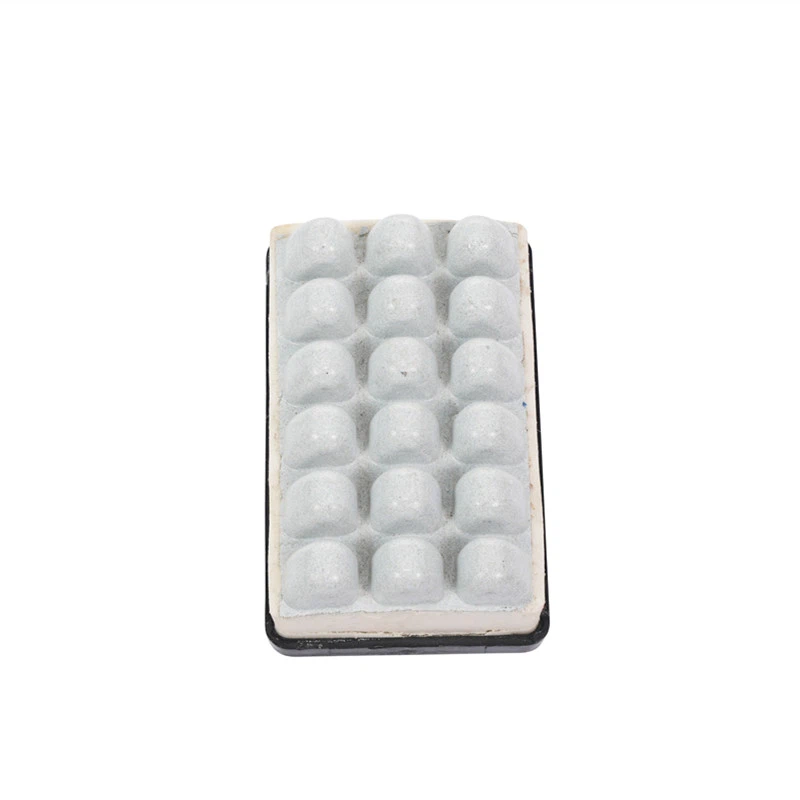
In terms of the abrasives used in Resilient Abrasive Blocks, they are usually of high quality. These abrasives are designed to be tough enough to handle the demands of rough grinding. They can cut through hard materials like ceramics, stone, and even some metals. The combination of the resilient backing and the strong abrasives makes for an effective rough grinding tool.
However, it's not all sunshine and rainbows. There are some limitations to using Resilient Abrasive Blocks for rough grinding. One issue is the speed. Compared to some heavy - duty, high - powered grinding machines, a Resilient Abrasive Block might be a bit slower at removing large amounts of material. If you're working on a massive project where you need to remove tons of material in a short time, you might need to use a more powerful tool in combination with the Resilient Abrasive Block.
Also, the lifespan of the block can be a concern. Since it's constantly flexing during rough grinding, the abrasives can wear out faster. But don't worry, we've designed our blocks to be as durable as possible. And if you take proper care of them, like cleaning them regularly and storing them in the right conditions, they can last a good long time.
Let's talk about the different types of Resilient Abrasive Blocks available. There are blocks with different grit sizes. Coarser grits are better for rough grinding as they can remove material more quickly. Finer grits are more for finishing touches. So, depending on your project, you can choose the right grit size. For example, if you're just starting to shape a ceramic tile, a coarser grit Resilient Abrasive Block would be your best bet. As you get closer to the final shape, you can switch to a finer grit for a smoother finish. You can explore our Elastic Polishing Abrasives for the finishing steps.
When using a Resilient Abrasive Block for rough grinding, there are a few tips to keep in mind. First, make sure you're applying the right amount of pressure. Too much pressure can cause the block to wear out faster and might also damage the material. Too little pressure, and you won't be removing enough material. It's all about finding that sweet spot.
Second, keep the block moving. Don't just let it sit in one place. Moving the block in a back - and - forth or circular motion helps to distribute the wear evenly and ensures a more consistent grinding result.
In conclusion, a Resilient Abrasive Block can definitely be used for rough grinding. It has its advantages like surface adaptability, reduced risk of damage, and high - quality abrasives. But it also has some limitations in terms of speed and lifespan. Overall, it's a great tool to have in your arsenal, especially for projects involving ceramics, stone, and other hard materials.
If you're interested in our Resilient Abrasive Blocks for your rough grinding needs, don't hesitate to reach out. We're here to help you find the right product for your project. Whether you're a professional contractor or a DIY enthusiast, we've got the solutions you need.
References:
- Industry knowledge and experience in abrasive products
- Research on the properties and applications of resilient abrasive materials