

Can a Resilient Abrasive Block be used for grinding nickel alloys?
Can a Resilient Abrasive Block be used for grinding nickel alloys?
As a supplier of Resilient Abrasive Blocks, I've been frequently asked whether our product can be effectively used for grinding nickel alloys. This question is not only relevant to the practical applications of our abrasive blocks but also reflects the growing demand in industries that work with nickel - based materials. In this blog, I'll delve into the properties of nickel alloys, the characteristics of Resilient Abrasive Blocks, and analyze the feasibility of using our blocks for grinding nickel alloys.
Properties of Nickel Alloys
Nickel alloys are a group of materials that offer a unique combination of properties, which make them highly valuable in various industries. These alloys typically contain a significant amount of nickel, along with other elements such as chromium, molybdenum, and iron. One of the most prominent features of nickel alloys is their excellent corrosion resistance. They can withstand harsh environments, including high - temperature and high - pressure conditions, which makes them ideal for applications in the chemical processing, aerospace, and marine industries.
In addition to corrosion resistance, nickel alloys also possess high strength and good ductility. They can maintain their mechanical properties at elevated temperatures, which is crucial for components in gas turbines, jet engines, and nuclear reactors. However, these very properties also make nickel alloys challenging to machine. Their high strength and toughness mean that they require a significant amount of energy to remove material during the grinding process. Moreover, nickel alloys have a relatively low thermal conductivity, which can lead to heat buildup during grinding. This heat can cause problems such as thermal damage to the workpiece, tool wear, and a decrease in the surface quality of the ground part.
Characteristics of Resilient Abrasive Blocks
Our Resilient Abrasive Blocks are designed with several key characteristics that make them suitable for a wide range of grinding applications. First of all, they have a high degree of resilience. This means that the block can conform to the shape of the workpiece during grinding, ensuring a consistent and even grinding action. The resilience also helps to absorb shocks and vibrations, which can reduce the risk of damage to the workpiece and the abrasive block itself.
The abrasive grains in our Resilient Abrasive Blocks are carefully selected for their hardness and cutting ability. They are capable of removing material efficiently, even from tough and hard - to - machine materials. Additionally, the bonding system in the abrasive block is designed to hold the abrasive grains firmly in place while allowing for self - sharpening. As the abrasive grains wear down, new sharp grains are exposed, maintaining the cutting performance of the block over time.
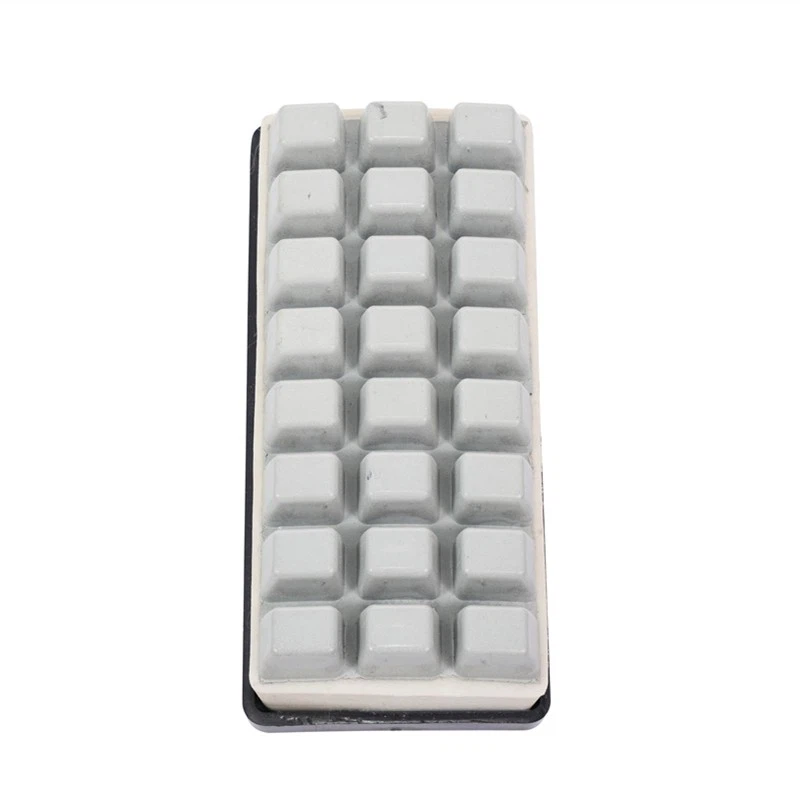

Another important feature of our Resilient Abrasive Blocks is their porosity. The porous structure allows for better coolant flow during grinding, which helps to dissipate heat and prevent thermal damage to the workpiece. It also helps to remove the chips generated during the grinding process, reducing the risk of clogging and ensuring a smooth grinding operation.
Feasibility of Using Resilient Abrasive Blocks for Grinding Nickel Alloys
Based on the properties of nickel alloys and the characteristics of our Resilient Abrasive Blocks, there are several reasons to believe that our blocks can be effectively used for grinding nickel alloys.
The resilience of the abrasive block is particularly beneficial when grinding nickel alloys. Since nickel alloys are tough and can cause significant vibrations during grinding, the ability of the block to absorb these vibrations can help to improve the surface finish of the workpiece. The consistent and even grinding action provided by the resilient block can also ensure that the material removal rate is uniform across the surface of the nickel alloy component, reducing the risk of uneven grinding and surface defects.
The high - quality abrasive grains in our Resilient Abrasive Blocks are capable of cutting through the tough nickel alloy matrix. Their self - sharpening ability means that they can maintain their cutting performance even when grinding a hard material like nickel alloy. This can result in a longer tool life and a more cost - effective grinding process.
The porosity of the Resilient Abrasive Block is also a major advantage when grinding nickel alloys. As mentioned earlier, nickel alloys have low thermal conductivity, which can lead to heat buildup during grinding. The porous structure of the abrasive block allows for better coolant penetration, which helps to keep the temperature down and prevent thermal damage to the nickel alloy workpiece. It also helps to flush away the chips, reducing the risk of clogging and improving the overall grinding efficiency.
However, it's important to note that grinding nickel alloys still presents some challenges. The high strength and toughness of nickel alloys mean that the grinding process may require more time and energy compared to grinding other materials. Additionally, the abrasive block may experience more wear when grinding nickel alloys, so proper selection of the abrasive grain size and bonding strength is crucial.
Applications and Case Studies
There have been several successful applications of our Resilient Abrasive Blocks in industries that work with nickel alloys. For example, in the aerospace industry, our blocks have been used to grind turbine blades made of nickel - based superalloys. These blades require a high - precision surface finish and tight dimensional tolerances. Our Resilient Abrasive Blocks have been able to meet these requirements, providing a smooth and consistent grinding operation.
In the chemical processing industry, our blocks have been used to grind pipes and fittings made of nickel alloys. The corrosion - resistant properties of nickel alloys are essential in this industry, and our abrasive blocks have been able to maintain the integrity of the material while achieving the desired surface finish.
Related Products
If you're interested in our Resilient Abrasive Blocks, you may also find our other related products useful. We offer an Abrasive Elastic Grinding Block for Ceramic Tiles, which is designed for the precise grinding of ceramic tiles. This product shares some of the same features as our Resilient Abrasive Blocks, such as high resilience and efficient material removal. You can also check out our Elastic Grinding Block Ceramic Tile for more information on our ceramic tile grinding solutions. Of course, if you specifically need a Resilient Abrasive Block, you can visit our product page at Resilient Abrasive Block.
Contact for Purchase and洽谈
If you're considering using our Resilient Abrasive Blocks for grinding nickel alloys or any other applications, we'd be more than happy to discuss your specific requirements. Our team of experts can provide you with detailed information on the product, including the appropriate abrasive grain size, bonding strength, and grinding parameters for your particular application. We can also offer samples for you to test in your own production environment.
Whether you're a small - scale workshop or a large - scale industrial manufacturer, we're committed to providing you with high - quality abrasive products and excellent customer service. Don't hesitate to reach out to us to start a conversation about how our Resilient Abrasive Blocks can meet your grinding needs.
References
- "Nickel and Nickel Alloys: Properties and Applications" by ASM International
- "Grinding Technology: Theory and Applications of Machining with Abrasives" by Stephen Malkin